
Habits are the invisible architecture behind every leader, small business, and nonprofit. They decide whether a strategy becomes results or a plan becomes a poster on the wall. The single habit that most reliably controls the next decade of your organization is the ability to start—consistently and strategically. This article lays out a practical playbook for building, maintaining, and redesigning the habits that will compound into meaningful progress in 2026 and beyond.
Why habits matter more than goals
Goals are destinations. Systems are the journeys that take you there. Wanting a better year—more revenue, more impact, higher retention—won’t change the outcomes unless the daily processes behind those goals change first. Your current results are the lagging measure of your current habits. If the bank balance, the program reach, or the team morale aren’t where you want them to be, don’t tweak the target—fix the inputs.
For leaders and small organizations this is critical: goals help with clarity, systems create repeatable outcomes. If you care about winning once, set a goal. If you care about winning repeatedly, design a system.
The one habit that controls the next ten years
The habit I want you to prioritize is the habit of starting—the discipline to begin the work that matters, even when the moment is inconvenient. Starting consistently is the lever that unlocks everything else: learning, hiring, fundraising, product improvements, client outreach. Mastering the art of showing up—reduced scope but fixed schedule—transforms bursts of effort into steady compounding.

The 4-step habit cycle (and how to use it)
Every habitual behavior follows four stages: cue, craving, response, and reward. If you want to build a new habit, treat each stage as a design opportunity.
- Cue: The trigger that gets your attention.
- Craving: The expectation or attraction that motivates action.
- Response: The actual habit you perform.
- Reward: The satisfying outcome that makes the habit likely to repeat.
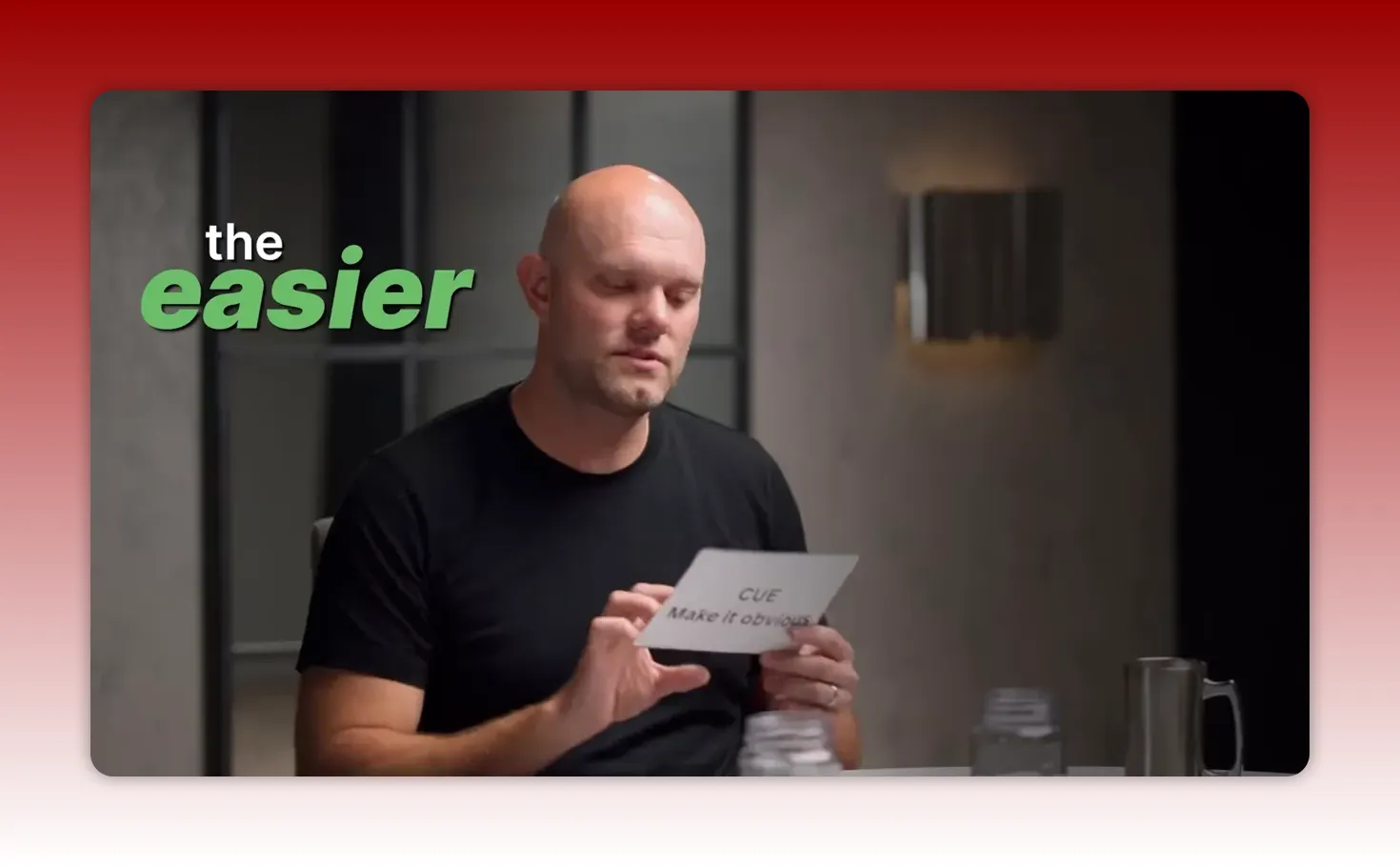
For a leader: make the cue obvious (calendar blocks, a green badge in your inbox), make the craving attractive (a short win or a peer shout-out), make the response easy (two-minute first step), and make the reward immediate (a quick progress marker or team notification).
The Four Laws of Behavior Change (practical translation)
Each stage of the habit cycle maps to a law you can apply immediately:
- Make it obvious: design environments and rituals that surface the cue.
- Make it attractive: bundle habits with things you enjoy or frame them so they feel appealing.
- Make it easy: lower activation energy—use the two-minute rule.
- Make it satisfying: provide immediate, visible rewards so the brain registers the value.

Make it obvious (environment as gravity)
Environments pull behavior like gravity. For a nonprofit, set the meeting room so donations reports are visible and interruptions are minimized. For a startup, put hiring next-steps on the team's whiteboard where everyone sees them. Walk the rooms where work happens and ask what behaviors are easy here. If your desired behaviors are not the path of least resistance, redesign the space.
Make it attractive (the fun question)
If a habit isn’t appealing, you won’t stick with it. Ask: what would this look like if it were fun? Replace bland versions of the habit with engaging ones. For a fundraising team, mock leaderboards and celebratory rituals make outreach feel like a game. For a small nonprofit, transform admin time into "impact mapping" sessions that reveal how that work directly connects to outcomes.
Make it easy (the two-minute rule)
The most powerful single principle for building a habit is to make it easy to start. Scale new behaviors down to a two-minute version—one page of reading, one set of squats, one sentence of writing. The point is to win the start.
A habit must be established before it can be improved. Show up, even small, and you create the capability to scale later.
Make it satisfying (signal progress)
Humans repeat behaviors that feel rewarding. For sustained adoption, pull the reward into the present: habit trackers, streaks, quick team recognition, or a physical token. Visual progress beats vague intentions. If you want a team to ship features, celebrate small merges, demos, or even post-its moved on a kanban board.
Start small, scale strategically
Leaders tend to design for peak performance. That’s useful—but often counterproductive early. Instead of asking what you could do on your best day, ask what you can stick to on a bad day. That floor becomes your baseline. From there, increase intensity.
Example: Want a weekly fundraiser? Start by making one donor call every day for 10 minutes. The small habit wins create authority and momentum.
Habit stacking: attach new behaviors to existing rhythms
One of the simplest ways to add a new habit is to anchor it to an existing one. Habit stacking takes something you already do and tacks the new habit on the tail of it.
Formula: After [current habit], I will [new tiny habit].
Practical examples:
- After the daily stand-up, write the one priority you'll protect for the next two hours.
- After you make coffee, review donor updates for 60 seconds.
- After you unlock your computer, open a document titled "One improvement" and add a single idea.
Identity beats outcomes
Every action you take is a vote for the kind of person or organization you want to be. Stop focusing only on outcomes and start asking who you want to become. When choices contribute to identity—"we are a team that hires carefully" or "we are a culture of learning"—they become easier to maintain.
For leaders: make identity explicit in onboarding and rituals. A small action like "every hire completes a two-step skills test" casts a vote for a deliberate hiring culture.
Systems over goals: practical steps for leaders and small teams
If your goal is monthly recurring revenue, your system should define the daily and weekly behaviors that will produce that result. Build checklists, templates, and meeting cadences that encode the system. Then protect the system more than you obsess over the target.
- Document a daily sales rhythm: 30 minutes of outreach, 15 minutes of follow-up notes.
- Design a weekly review: 60 minutes where the leadership team inspects the system, not the number.
- Create templates that reduce activation energy: email templates, hiring scorecards, fundraising scripts.
Upstream habits: work on what unlocks multiple wins
Ask: which habits are upstream of many other positive outcomes? Sleep, exercise, focused learning, and weekly reviews commonly unlock better decision-making, energy, and resilience. For a small business, upstream habits could be a morning pricing review or weekly user interviews that cascade into better product decisions.
Make change social: the environment and group norms
Humans are social animals. The groups you belong to shape your identity and your default behaviors. If the group values the habit you want, it becomes far easier to maintain. If not, either create a new space where the habit is normal, or change the norms where you already operate.
Practical options:
- Form a peer accountability circle of other small business leaders who share metrics weekly.
- Host monthly impact sessions for nonprofits to review stories, not just numbers.
- Create rituals in the office that make the behavior normal: a brief "what I shipped" segment at stand-up or a public donor shout-out board.
Hats, haircuts, tattoos: move fast when reversible
Not all decisions are equal. Use a simple mental model:
- Hats: reversible, try fast, learn fast. Experiment.
- Haircuts: semi-reversible, require a little time. Move faster than you fear.
- Tattoos: hard to reverse, think carefully.
Leaders often overcomplicate reversible decisions. Speed yields information. Put reasonable experiments in place and iterate.
Habit shaping: the slow, patient climb
For ambitious organizations, the temptation is to design peak performance from day one. Instead, shape habits gradually:
- Define the embarrassingly small first step (put shoes by the door).
- Repeat until the step is automatic.
- Increase the scope slowly.
This is how habits persist through seasons—when your context changes, your habits can change shape and still serve their purpose.
Habit trackers, streaks, and psychological momentum
Real-world progress is often delayed. To stay motivated, visualize progress daily. A habit tracker or streak creates immediate feedback that produces momentum. For teams, a public tracker fuels shared pride and healthy rivalry.
Small examples:
- Paperclip system for sales: move a paperclip for each call. The visual cue and the satisfaction of moving items creates a simple dopamine loop.
- Team streak: a daily Slack channel where the team posts the single most important thing they shipped.
- Streak insurance: when someone breaks streak, they have a quick rebound plan—one minute, two-minute restart—to prevent zero days.
Breaking bad habits: invert the four laws
To break a habit, invert the laws:
- Make it invisible: remove cues, unsubscribe, hide temptations.
- Make it unattractive: reframe the behavior to highlight costs.
- Make it difficult: add friction between you and the habit.
- Make it unsatisfying: add immediate consequences or accountability.
Example for organizations: if frivolous purchases are draining budgets, move approval thresholds up one level, require a one-paragraph justification, and display approvals publicly. Small friction plus visibility reduces impulse decisions.
Pull rewards forward; bring costs into the present
Most bad habits reward now and penalize later. Good habits often reward slowly. Bridge that gap by making the benefits of good behaviors immediate and the costs of bad behaviors tangible today.
- Immediate rewards: public recognition, small prizes, or a team lunch when a sprint completes.
- Immediate costs: a pledge contract, accountability partner, or small financial consequence for missed commitments.
Reflection and review: the meta habit
The top leaders I see treat reflection as nonnegotiable. Block time to review systems—not just outcomes. If you do nothing else, spend an hour each week asking: are my current habits carrying me toward the future I want? If not, what must change?
Schedule reviews into the system itself. Make them short, structured, and outcome-focused: inventory what worked, what didn’t, and one next step.
Seasons, sequencing, and four burners
Life and organizations move in seasons. You cannot do everything at once. The four burners idea—career, family, health, friends—applies to teams as well: product, sales, hiring, culture. Sequence priorities thoughtfully. Which burners should be up now?
If you want to build a durable enterprise, map out 10-year arcs and the one-hour moves that shape them. This helps prioritize upstream work (hiring a CFO, building a repeatable sales process) instead of being trapped in storms.
Repetition, identity, and the neuroscience of 'easier' days
Habits become easier because of lowered friction, increasing familiarity, social ties, and identity reinforcement. Repetition does not just automate behavior—it builds the story you tell about yourself. Each small action is a vote for identity: "I am a reader," "we are a hiring-first organization," "this nonprofit is a data-driven team."
Over time, the identity shift is what protects the habit when motivation dips.
Handle failure quickly: the secret to long-term resilience
Everyone slips. The real advantage goes to the team that has a fast plan to reclaim habits after setbacks. Design a short failure recovery playbook: 1) acknowledge, 2) scale the habit back to a micro-version, 3) resume the schedule. The faster you get back to one small step, the less damage a lapse does to momentum.
Practical habit blueprints for leaders, small businesses, and nonprofits
Blueprint A: The Hiring Habit (for scaling startups and nonprofits)
- Cue: weekly hiring board update at Monday stand-up.
- Craving: public progress and hiring leaderboard.
- Response: spend one hour per week sourcing or screening candidates (two-minute rule: open LinkedIn, send one message).
- Reward: add one candidate card to the interview pipeline and publicly celebrate every hire with a short onboarding ritual.
Blueprint B: The Fundraising Habit (for small nonprofits)
- Cue: calendar reminder every morning labeled "Donor Minute."
- Craving: attach a short donor story to each outreach to make it emotionally attractive.
- Response: one donor-touch per day (email, call, or thank-you note).
- Reward: a tracker that shows monthly touches and a small team celebration when milestones hit.
Blueprint C: The Learning Habit (for leaders)
- Cue: 8 a.m. "learning" calendar block three times a week.
- Craving: choose material tied to immediate problems (fun + utility).
- Response: read one page or review one short case study (two-minute rule).
- Reward: write a single sentence in a shared document about one idea you can implement this week.
Tools and rituals that actually stick
- Habit scorecard: list daily habits and mark plus, minus, or neutral. Use it weekly to redesign the system.
- Paperclip method: use physical markers for actions—sales calls, donor contacts, code commits.
- Streak trackers: public streaks for team rituals (stand-ups, ship day, user interviews).
- Micro-commitments: scale down to ridiculously small starts to win the start.
Common obstacles and how to solve them
Obstacle: "I don't have time"
Solution: reduce scope but stick to schedule. Protect one consistent anchor in your day and attach new habits to it.
Obstacle: "I lose momentum after the first wins"
Solution: normalize seasons. Expect variability and build a fast recovery plan. Celebrate small wins to sustain psychological momentum.
Obstacle: "My environment undermines progress"
Solution: redesign context (remove cues for bad habits, add cues for good ones). Join groups where the desired habits are normal.
Obstacle: "We can't afford to change culture"
Solution: start small. Create micro-environments and rituals that model the culture you want. Small gatherings, retreats, or a weekly "one improvement" meeting can seed broader change.
How to pick which habit to start with
With many competing priorities, prioritize upstream habits—those that unlock many other benefits. Sleep, review time, weekly hiring cadence, or focused customer interviews often produce compound returns. If unsure, ask two questions:
- Which daily habits are most upstream of the outcomes I want?
- Which habit can I perform even on my worst day?
Measuring success: trajectory over position
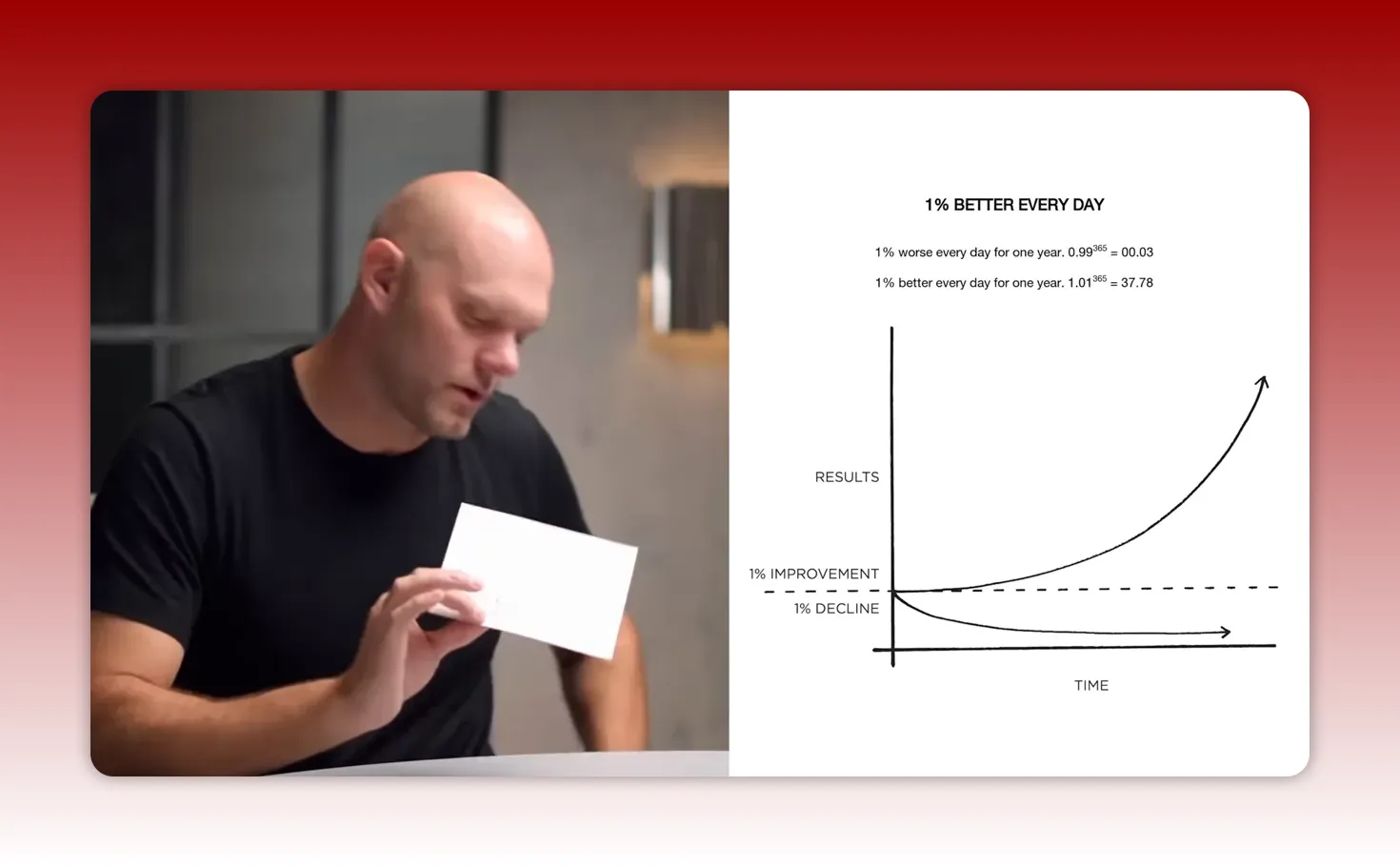
Focus on trajectory. A 1% improvement compounded over time matters far more than a spectacular one-off. Use weekly metrics that show whether the arrow is pointing up. If so, time will magnify your advantage.
Common leadership misreads
- Believing motivation precedes action. Action often creates motivation.
- Treating every decision like a tattoo. Many choices are reversible hats—try them.
- Confusing intensity for consistency. Consistency enlarges ability.
Seasonal design: when to change a habit
Habits don’t always last forever in the same form. They change with seasons. When you sign a big contract, have a baby, or hit a growth inflection, reshape habits rather than treat breaks as failure.
Action checklist for the next 30 days
- Pick one upstream habit and write the two-minute version.
- Create a cue and a visible tracker you will see daily.
- Stack the new habit onto an existing habit.
- Design a satisfying, immediate reward.
- Schedule a 30-minute weekly reflection to inspect your system.
FAQ
How long does it take to form a habit?
There is no single number. Habit formation varies by complexity. Simple behaviors can take a few weeks; complex routines may take months. Think of habits as lifestyle choices, not finish lines. The key is consistent repetition and designing your environment to support the habit.
Which is better: consistency or intensity?
Consistency wins. Small, frequent actions compound. Intense bursts lead to short-term results but rarely sustainable change. Build consistency by reducing activation energy and prioritizing recovery plans for when you lapse.
How do you break a bad habit in a team?
Invert the four laws: make the cue invisible, make the habit unattractive, increase friction, and add immediate consequences. Change the social norms by creating new rituals that reward the new behavior and disincentivize the old one.
What should leaders prioritize first when building habits across the organization?
Focus on upstream systems: hiring, onboarding, weekly reviews, and customer feedback loops. These habits multiply downstream benefits and create durable advantages.
Is identity really that important for habits?
Yes. Actions that reinforce identity are far more sticky. Position habits as identity votes: "we are the kind of organization that _____." Each small action accumulates into a shared identity.
How do I keep team morale when instituting new processes?
Make early wins visible and fun. Use trackers, public recognition, and rituals. Scale changes slowly and solicit feedback. When people feel progress and belong, they engage.
What tools help small teams form habits?
Simple tools: a shared habit tracker, calendar blocks, Slack channels for daily updates, and short weekly reflection templates. Physical markers like paperclips or whiteboard columns work surprisingly well.
What if a habit worked before but no longer fits?
Habits have seasons. When your context changes, reshape the habit. Keep the identity and purpose but adapt the practice. Moving from writing long articles twice a week to weekly newsletters is a common example.
Final thoughts for leaders, founders, and nonprofit directors
The most reliable path to a powerful 2026 is not a list of big resolutions. It is the small, deliberate architecture you build into your everyday work. Prioritize the habit of starting. Design your environment. Make starts trivial. Stack habits onto routines you already perform. Celebrate tiny wins publicly. And protect time for reflection.
Over time these minutes and small actions compound. A year from now, 1% daily improvements will produce a different organization and a different life. Choose the system you will live with, not the goal that sounds impressive on paper.
If you pick a single habit to begin with, let it be the habit of starting: the micro-commitment you can do even on your worst day. Build that, and everything after it becomes possible.
Start small. Be consistent. Design the environment. Protect the review.
This article was created based on the video Discipline Expert: The Habit That Will Make Or Break Your Entire 2026!.


