
AI assistants are rewriting how people find and choose products and services. Shoppers complete purchases nearly 47 percent faster when assisted by AI, and AI systems increasingly prefer to recommend brands by name instead of just giving generic advice. If your brand is absent from ChatGPT, Claude, Google AI mode, or other large language model assistants for searches that matter to your business, you are leaving conversions, trust, and revenue on the table.
Why brand mentions in AI assistants matter more than raw traffic
Traditional search engine optimization rewarded raw organic traffic. Create informative content, earn backlinks, build authority, and eventually convert visitors through persuasive pages. That approach still works for many businesses, especially new sites trying to build domain authority. But AI is different in one crucial way: it often answers with recommendations and named brands.
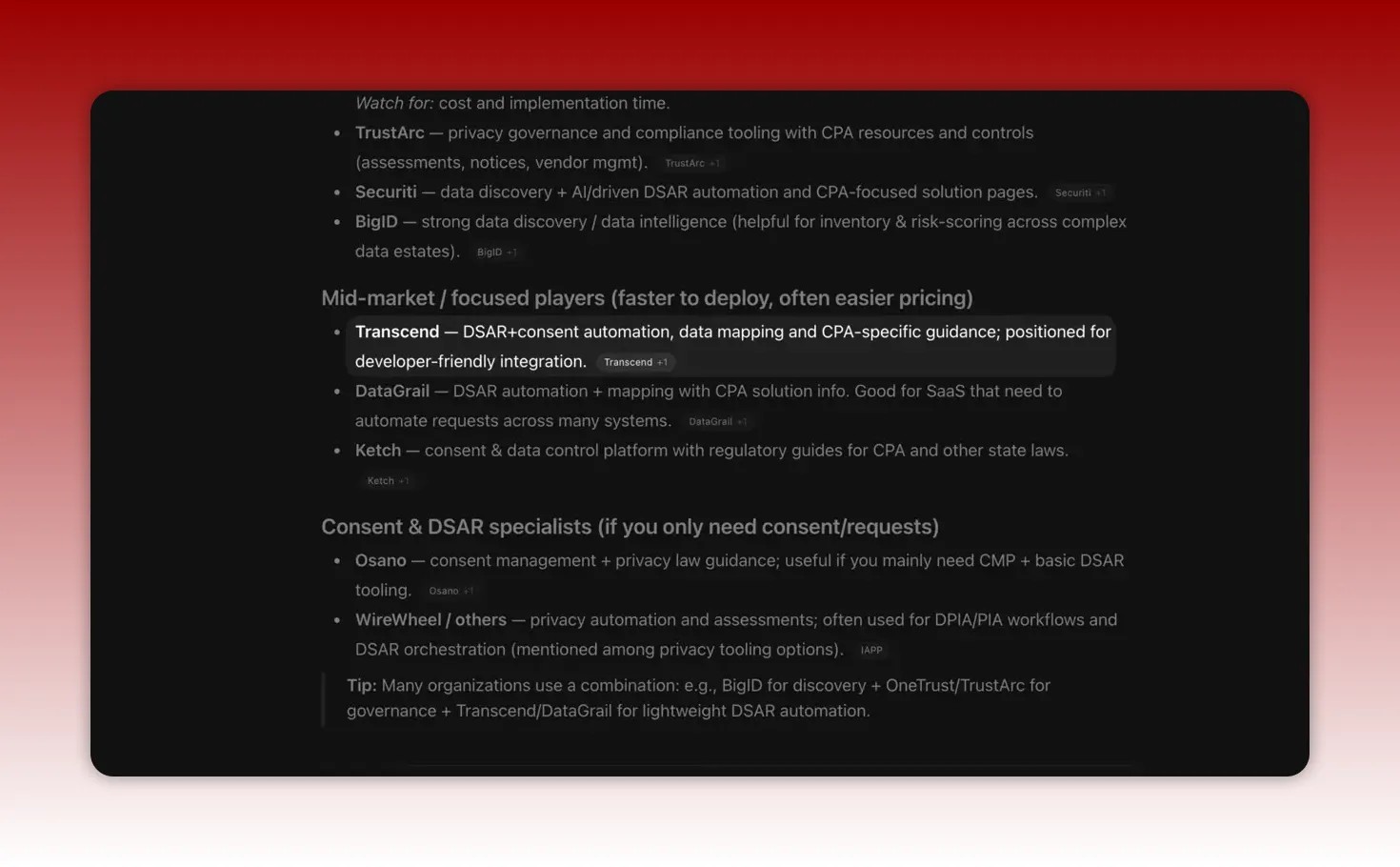
When someone asks an AI assistant a conversational, contextual question, the assistant is likely to produce actionable suggestions. These responses are trust signals. An explicit brand mention is a recommendation that can shorten the buying process. For example, asking an AI assistant which privacy management tools comply with a specific law often produces a shortlist that includes named vendors. If your website doesn’t have tailored, comprehensive pages that clearly communicate capability and fit, the assistant has little reason to include your brand in that shortlist.
Two game-changing differences between AI search and traditional search
There are many similarities between classic SEO and AI visibility. The core fundamentals—relevancy, clarity, authority, and good user experience—still matter. At the same time, two differences deserve attention:
- Diverse offsite brand mentions. AI systems place higher weight on patterns of brand signals offsite—mentions on authoritative pages, press, third-party lists, directories, and social signals. Those diverse, contextual mentions make a brand more likely to be surfaced as a recommendation.
- Many robust, feature-level money pages. AI assistants are triggered by specific, detailed queries. To get a brand mentioned, you need a forest of comprehensive pages focused on precise features, use cases, industries, integrations, and regulatory contexts. One or two generic solutions pages won’t cut it.
The reversed funnel: why start at the bottom
Think of the marketing funnel in three layers: top-of-funnel educational content, middle-of-funnel persuasion content, and bottom-of-funnel money pages. Historically, many teams focused heavy resources on top-of-funnel content to build authority, letting the growth snowball toward more competitive terms. With AI-driven discovery, the priority flips for many businesses: make the bottom your foundation.
Money pages have one job. Close the deal. They are the pages that answer the final, commercially minded questions customers have: how much, what exactly do I get, will it work for me, can it integrate with my stack, and how fast can I see results? These pages need to be specific, honest, and rich in detail so that both humans and AI assistants can confidently cite them.

What a money page looks like
A single money page should act like a focused mini sales presentation for one offering, feature, or use case. The clearer and more self-contained each page is, the more likely an AI assistant is to surface it when users pose the right conversational query.
Blend persuasive middle-of-funnel elements with bottom-of-funnel conversion elements on every page. For example, a consultant offering grant-writing services should have a page just for “Grant writing for arts nonprofits” that includes benefit-led headlines, case studies, a clear pricing model or engagement guide, integration details (how you work with clients), and a short FAQ addressing common objections.
Money page checklist
- Benefit-driven headline that speaks to a specific pain point or outcome.
- Short summary that answers who this is for and what it delivers.
- Detailed features or service components explaining exactly what is included.
- Evidence and social proof such as client logos, testimonials, case studies, or quantified outcomes tied to the specific page.
- Comparison and alternatives section showing how you stack up versus typical alternatives; be honest and clear.
- Pricing or call-to-action to pricing or clear steps to request a quote for service businesses; for nonprofits, include donation impact examples or partnership options.
- Integrations and technical requirements where relevant—how your solution or service connects to the client’s operations.
- Who this is for and who this is not for to help self-qualify visitors and reduce wasted leads.
- FAQ addressing the most specific operational questions prospects might ask.
- Multiple clear CTAs and a low-friction conversion path such as a demo, consult booking, or donate button.
Case study: how a privacy platform made itself unavoidable
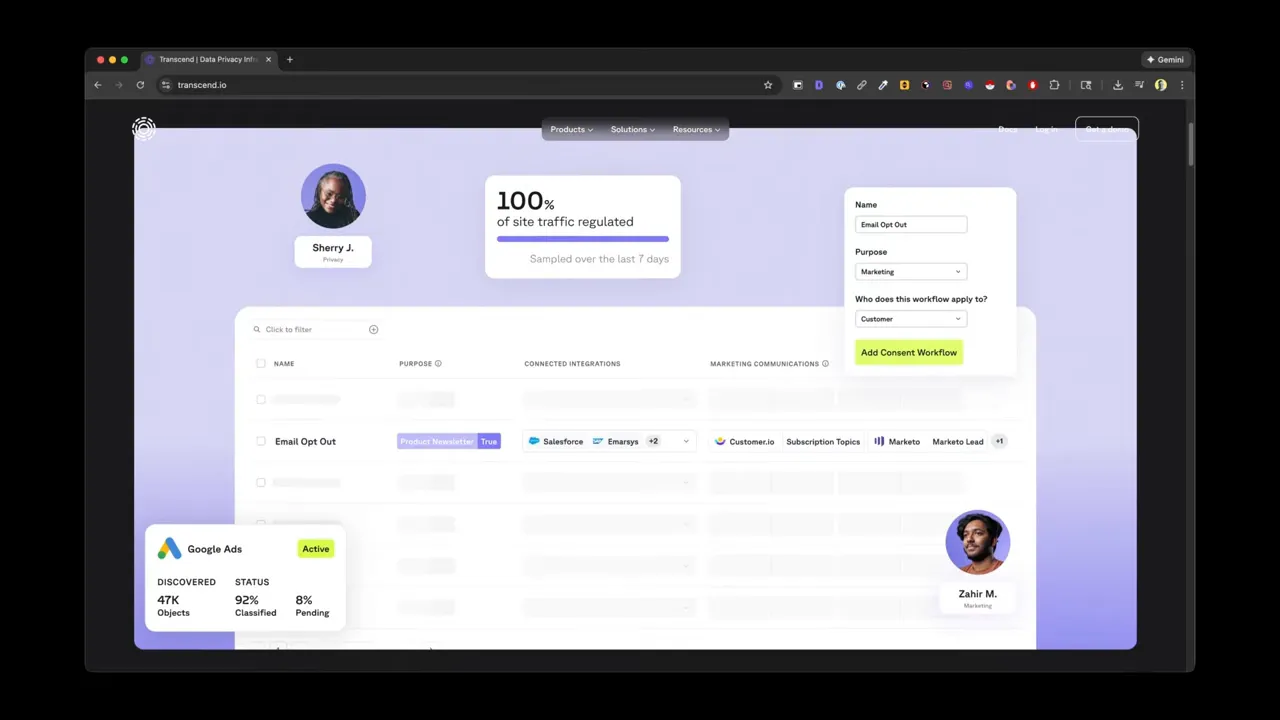
Transcend, a privacy infrastructure platform, is a useful example of what many larger B2B brands are doing well. Instead of a single features page, Transcend created dozens of money pages: a page for each product feature, a page for integrations, pages tailored to each industry use case, and pages that address specific regulations like GDPR or the Colorado Privacy Act.
By building around 35 money pages, each deeply focused on a precise need or regulation, the brand became the obvious candidate when AI assistants answered queries like Which privacy management platforms help me comply with the Colorado Privacy Act? The assistant can cite a specific Transcend page and include it in its shortlist.
This strategy achieves three things at once. It improves conversion because visitors find specific answers quickly. It shortens the sales cycle because prospects can self-educate. It increases the chance of being named by AI systems because the content answers precise, conversational prompts that lead to brand mentions.
Why more money pages? The mechanics behind AI naming brands
AI assistants tend to surface brand names when they have high-confidence evidence that a brand handles a specific situation well. High-confidence evidence can be built from several signals:
- Detailed, explicit pages that describe features, use cases, integrations, pricing, and outcomes.
- Consistent internal linking between topical clusters that demonstrates a complete content ecosystem.
- External brand mentions on authoritative third-party pages, press, directories, and community discussion.
- Clear schema and structured data where applicable so that scrapers and knowledge systems can extract facts easily.
When your site contains many targeted pages each answering narrowly focused questions, AI systems find discrete, citable sources. That matters more than having a generic guide that only teaches a concept without naming vendors or concrete steps to buy.
How to prioritize your money page build when resources are limited
Creating 30 or 40 fully detailed money pages sounds daunting, especially for small consulting firms, professional services businesses, and nonprofits. The good news is you do not need to do everything at once. Work iteratively and follow a priority framework that maps to potential impact and ease of production.
Step 1: inventory what you already have
List every page that could be considered a money page: services, program descriptions, pricing or donation pages, case studies, program outcomes, partnership pages, and industry-specific landing pages. Include any feature-level pages or FAQs that address buying concerns.
Step 2: score pages by AI potential
Score pages on two axes: commercial intent and uniqueness. High commercial intent means the page targets a purchase decision or donation decision. High uniqueness means it addresses a niche or regulation or use case that fewer competitors cover. Prioritize pages that rank highly on both axes.
- High intent + high uniqueness = top priority.
- High intent + low uniqueness = medium priority (improve depth and add evidence).
- Low intent + high uniqueness = potential win for AI long-tail mentions.
- Low intent + low uniqueness = deprioritize or consolidate.
Step 3: pick a minimal viable money page template
Create a repeatable template so each money page follows the same structure. The template should include a headline, short summary, evidence, features, who it’s for, pricing/CTA, FAQ, and technical/integration details where applicable. Using a template saves time and keeps pages consistent without reinventing the wheel.
Step 4: batch content production
Group similar pages together and produce them in batches. For example, if you offer service bundles for different industries—healthcare, education, nonprofits—create the industry templates first and reuse assets like testimonials and case studies by updating context-specific outcomes.
Step 5: measure and expand
Track which new money pages start appearing in AI assistant responses or drive qualified traffic and conversions. Expand the approach to adjacent features or new use cases as you collect evidence of wins.
Surfer or similar tools: how templates and topical maps help
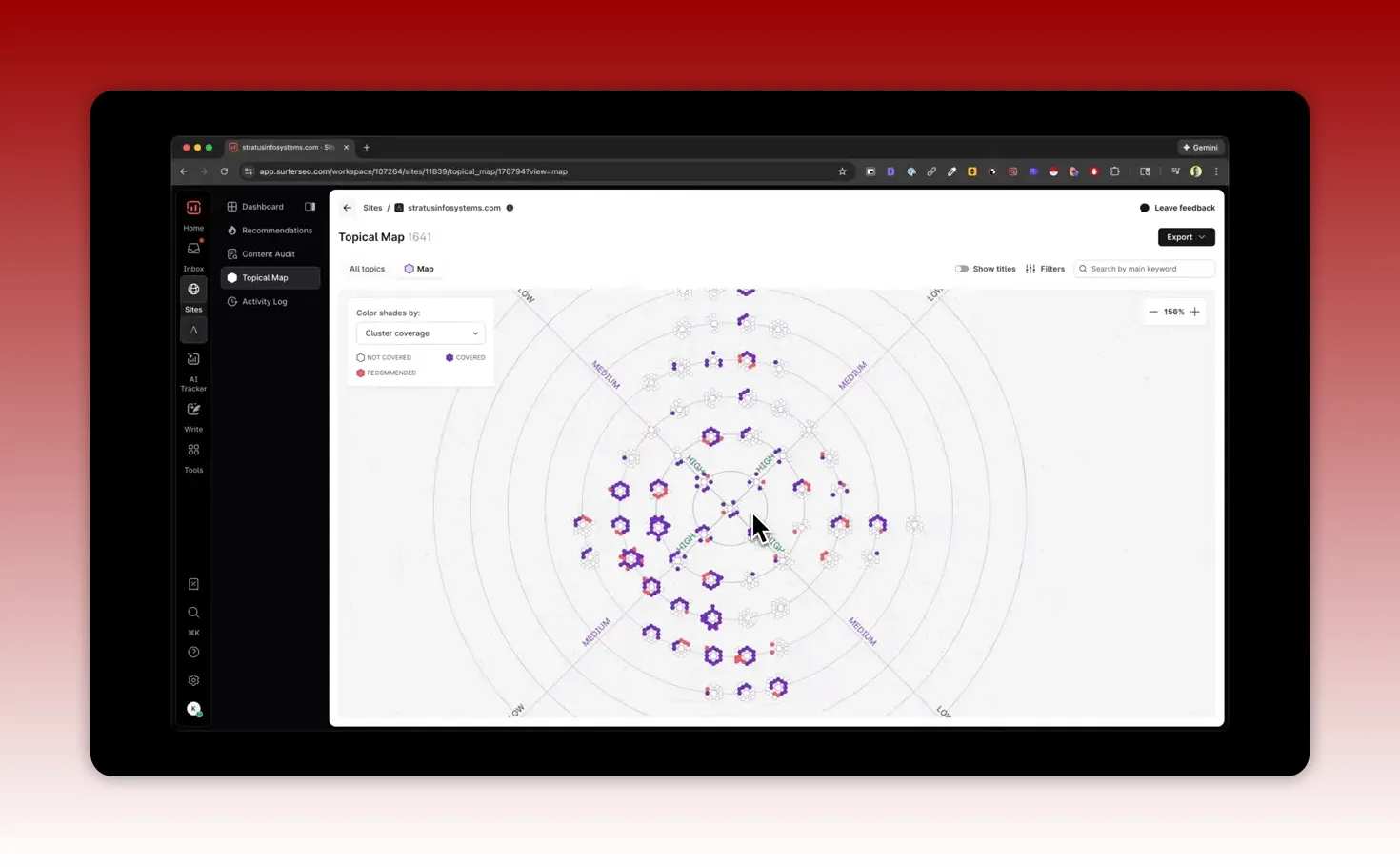
Tools that combine SERP competitor data and content structure can speed this process. Templates geared for comparison pages, feature pages, and landing pages offer an efficient starting point—so you are not staring at a blank page for each new money page. Topical maps visualize what you already cover and where the gaps remain, helping you choose the highest-value pages to build next.
Money pages for consultants, small professional services, and nonprofits
What does a money page look like in the real world for organizations with limited budgets and lean teams? Below are practical money page ideas tailored to consulting practices, small agencies, legal or accounting firms, mental health providers, and mission-driven nonprofits.
For consultants and small agencies
- Service page per offering: “Retainer SEO for B2B SaaS” rather than a generic SEO services page.
- Industry-specific service pages: “SEO for Fintech Startups” or “Digital Fundraising for Environmental NGOs.”
- Feature pages for deliverables: “Monthly Content Calendar Production” or “Quarterly Technical SEO Audit.”
- Pricing or engagement model pages: clear tiers, what’s included in each, and typical timelines.
- Case studies per industry or outcome, each with measurable results and client quotes.
For small professional services firms (law, accounting, therapy)
- Practice area pages focused on outcomes: “Estate planning for small business owners” or “Nonprofit audit services.”
- Situational pages answering common buying queries: “What to expect during a nonprofit audit” or “How much does estate planning cost for families with modest assets?”
- Integration pages describing how you work with advisors, financial planners, or ERPs.
For nonprofits
- Program pages that read like product pages: clearly define beneficiaries, outcomes, eligibility, timelines, and funding needs.
- Impact pages showing data and stories: “Our rural literacy program impact 2024,” with hard numbers tied to outcomes.
- Donation option pages by audience: “Recurring donations for corporate partners” and “Small monthly giving for individual donors.”
- Partnership and sponsorship pages that explain how organizations can work with you and what they receive in return.
Practical page structure templates (fill-in-the-blanks)
Below are streamlined outlines you can use as templates. Each template fits onto a single page and is optimized to be both human-friendly and AI-citable.
Template A: Single-service money page
- Headline: clear benefit in one line
- One-paragraph summary: who, what, and outcome
- Bulleted list of features or deliverables
- Who this is for / who this is not for
- Evidence: short case study or testimonial relevant to the service
- Pricing or engagement options with CTA to book a consult
- FAQ answering the top 6 operational questions
Template B: Industry-specific program or nonprofit initiative page
- Headline: target audience and the primary impact
- Short intro explaining eligibility and typical outcomes
- Program components and timeline
- Quantified impact and evidence
- How to apply or partner and clear CTA
- Donor or partner benefits section (for nonprofits)
- FAQ addressing funding, deadlines, and reporting
Content signals AI assistants look for
To nudge AI assistants to mention you, ensure each money page contains these signals:
- Precision: answer very specific queries. If you want to be cited for compliance with a law or a niche service, use the exact legal name, the relevant use case, and examples.
- Authority: include evidence such as case studies, named clients, numbers, and links to project reports where possible.
- Clarity: short, scannable sections and explicit headings that match likely natural language queries.
- Completeness: cover the who, what, when, where, why, and how so the assistant can extract a full, confident answer.
Internal linking: connect top-of-funnel content to money pages
When you do create educational content, use it to drive authority toward your money pages. Every how-to, guide, or industry explainer should naturally link to multiple money pages. That internal linking pattern signals topical depth to both search engines and AI systems, boosting the chance that AI will surface your brand for related questions.
Practical calendar and team plan for a small organization
Here’s a realistic six-month plan for building out money pages with a lean team. Substitute “volunteer writer” or “contract copywriter” where appropriate for nonprofit teams.
- Week 1–2: Content audit and priority scoring. Inventory pages and assign priority scores (commercial intent x uniqueness).
- Week 3–6: Create templates and write the first five high-priority money pages. Use existing assets like proposals and case studies to reduce writing time.
- Week 7–10: QA, design assets, and launch first five pages. Add FAQs and conversion tracking.
- Month 3–4: Batch-produce the next 10 pages (two per week) using the template. Reuse evidence and client quotes across pages where relevant.
- Month 5: Produce industry-specific pages and partnership pages targeted at high-value audiences or funders.
- Month 6: Analyze performance, gather feedback from sales or intake, and refine. Expand to 30 pages over the next six months using the same rhythm.
Measuring AI visibility and conversion impact
AI visibility is still a developing metric, but here are practical ways to measure progress:
- Monitor organic conversions and time-to-purchase. If your conversion funnel shortens, that is a tangible sign AI-driven consideration is improving.
- Search for the conversational queries you expect to trigger brand mentions by prompting major assistants with realistic prompts. Note whether your pages are cited or whether competitors are named.
- Track organic traffic and keyword long-tail wins for pages newly launched; money pages often pick up high-intent long-tail terms.
- Use analytics to measure bounce rate, scroll depth, and form submissions on money pages. A rise in qualified leads signals better performance.
Common objections and replies
Concern: Creating dozens of money pages feels like duplication and might hurt SEO.
Reply: If pages are written to target distinct intents, verticals, or features with unique evidence and copy, they are not duplicate content. Each page should clearly serve a distinct buyer journey question. When done correctly, this increases organic reach and conversion rather than cannibalizing it.
Concern: I don’t have case studies or big clients to cite.
Reply: Use specific outcomes from smaller projects, anonymized stories, or process-based evidence. For nonprofits, use program evaluation results and impact numbers. Even small-scale evidence beats vague claims and is more citable by AI assistants.
Concern: I can't afford a big content team.
Reply: Start small and be intentional. Prioritize high-impact money pages, reuse templates, and batch content creation. Use a mix of in-house subject matter experts and skilled contractors for writing and design. Focus first on pages that directly affect conversions and revenue or donations.
How AI queries look different and how to answer them
Users talk to AI differently than they type into search. Queries are longer, conversational, and context-rich. Instead of “on-page SEO tools,” someone might ask, “As an agency owner, what are AI-powered tools I can fold into my workflow to quickly produce high-quality, search-optimized content for my clients?”
Answering these conversational prompts means your pages should include example-driven sections, recommended workflows, and comparisons that an assistant can easily summarize. Use headings and short paragraphs that map to likely conversational intents. The more you match the phrasing and nuance of real questions, the easier it is for an AI to extract and cite your content.
Practical writing tips for money pages
- Write for clarity: use subheadings that could double as natural language responses to user prompts.
- Include explicit named examples: name regulations, industries, or common tools you integrate with.
- Add short, specific case studies: 3–5 sentences with measurable outcomes and the timeframe.
- Keep paragraphs short: 2–4 sentences max to aid skimming and AI extraction.
- Use a few crisp bulleted lists for deliverables, timelines, and inclusion criteria.
Quick checklist to start building your money-page program today
- Inventory all potential money pages.
- Score pages by commercial intent and uniqueness.
- Create a single repeatable template for money pages.
- Write and launch your first five priority pages in the first 4–6 weeks.
- Use internal links from blogs and guides to these pages.
- Collect evidence and convert it into mini case studies for each page.
- Measure conversions and iteratively improve content.
Compound effects you should expect
When you build a foundation of high-quality money pages, three things happen over time:
- Improved conversions because visitors find the specific details they need to commit.
- Shorter sales cycles as prospective buyers self-educate before contacting you.
- Higher likelihood of AI mentions because AI systems can find and cite clear, specific evidence that you handle particular needs.
Final notes for nonprofits and small professional services
Money pages for nonprofits are still “money” pages. The conversion isn’t always a transaction; it could be a donation, a volunteer sign-up, a partnership inquiry, or a funding request. Treat those conversion goals with the same rigor as a SaaS pricing page. Be explicit about outcomes and how donations or partnerships translate into measurable impact. For professional services, be explicit about outcomes, timelines, and what success looks like—clients want lower risk and predictable results.
If you adopt a bottom-up funnel focus—building many specific, conversion-focused pages first—your top-of-funnel content will perform better because it has a stronger internal link economy to feed. Over time, that combination wins both classic search and the new world of AI-assisted discovery.
How many money pages should a small consulting firm aim to create?
A practical target is 10 to 20 solid money pages in the first six months. Prioritize pages that combine high commercial intent with unique positioning. Focus first on service-level pages and industry-specific pages that capture your core offers and most valuable niches.
What’s the difference between a money page and a regular service page?
A money page is deeply focused on a single commercial intent, with explicit evidence, pricing or clear next steps, FAQs, and conversion elements designed to close the deal. A regular service page can be broader and might cover multiple offerings; a money page answers the single question a buyer needs to make a purchasing decision.
Can small nonprofits use this strategy even without big budgets?
Yes. Prioritize impact-driven pages like program-specific donation pages, partnership pages for corporate sponsors, and short case studies. Use volunteer or contractor help for writing and repurpose evaluation reports into citable evidence rather than spending on big marketing campaigns.
How do I test whether AI assistants mention my brand?
Use realistic, conversational prompts that your audience might ask an assistant and see whether your brand or pages are cited. Repeat with multiple assistants when possible. Track changes over time as you launch and refine money pages.
Will creating many pages hurt my SEO due to duplicate content?
Only if pages are near-duplicates. Each money page should target a distinct buyer intent with unique evidence and wording. Consolidate pages that truly overlap and keep separate pages for unique features, industries, regulations, or outcomes.
How should I prioritize writing money pages versus blog posts?
Start with money pages if your goal is to increase AI mentions and conversions quickly. Once you have a strong set of money pages, produce targeted blog posts that link to them. This order maximizes the internal link value and ensures educational content feeds commercial pages.
What content elements are AI assistants most likely to extract and cite?
Short summaries, explicit lists of features or outcomes, named examples (regulations, industries, or tools), and quantifiable results are most extractable. Structure content with clear headings and concise bullet lists so AI systems can identify and summarize your points easily.
How long until I might see AI-driven improvements?
It varies, but you may begin to see changes within 4 to 12 weeks for specific niches if pages are well optimized and there are supportive offsite signals. Broader brand-level AI visibility often takes longer as external mentions and authority signals accumulate.
Next steps
Start with a focused content audit and pick five priority money pages that move the needle for revenue or donations. Use a repeatable template, pack each page with precise evidence, and link from your existing educational content. Over time, the collection of targeted money pages becomes a durable foundation that helps both people and AI systems find and recommend your organization.
Happy building and may your brand become an inevitable mention when the next AI assistant recommends solutions in your space.
This article was created based on the video How to Get Mentioned in ChatGPT in 2026: Make Money Pages!.


