
Building a successful business does not require genius, a fancy degree, or a two-year sabbatical. It requires answering five simple questions reliably, focusing on real human needs, and experimenting fast. Josh Kaufman condenses decades of business practice into a practical framework you can use right now: value creation, marketing, sales, value delivery, and finance. This is the operating system every founder, manager, or aspiring leader should internalize.
How most people get business wrong
People assume business is complicated. They imagine dense textbooks, inscrutable jargon, and five-figure tuition bills. In reality the most powerful levers are simple. The best companies answer five questions that every company must answer. If you can do that deliberately, you can see and improve any business.
"This is the foundation of every business plan that has or ever will exist."
That sentence is not marketing. It is a map. With this map you can deconstruct any company, ask the right questions in interviews, and decide whether to join, improve, or start a business of your own.

The five fundamental parts of every business
Every business has five interdependent processes. They are universal and unavoidable. When one of them breaks, the whole system struggles. Learn them, and you can diagnose and fix businesses quickly:
- Value creation — What valuable thing are you making or providing?
- Marketing — How do you get the attention of people who care?
- Sales — How do you ask for and receive money?
- Value delivery — How do you actually deliver what you promised so customers are satisfied?
- Finance — Are you bringing in more money than you are spending? Is it enough?
These five components explain most business decisions: product features, pricing, hiring, distribution, and growth strategy. They are the skeleton. Everything else hangs off these core bones.
Value creation: start with an unmet need
Value creation is the place most ideas go to die or thrive. It sounds obvious: find a problem and solve it. The nuance is in discovering the right problem and the right form of the solution.
People don't buy products. They buy solutions to problems or changes in feeling and status. That changes how you think about product design.

Trade-offs are unavoidable. You can design the longest-lasting candle, the cheapest candle, or the candle with the most evocative scent. Pick one or two axes and crank them to 11. Trying to optimize everything at once usually results in a mediocre, expensive product that pleases no one deeply.
"A lot of the early stage value creation process is making trade-offs between competing priorities."
Marketing: get the right attention, not every attention
Marketing is all about attention economics. The human attention budget is the scarcest commodity. Marketing is the art and science of attracting the specific people who care about the value you create.
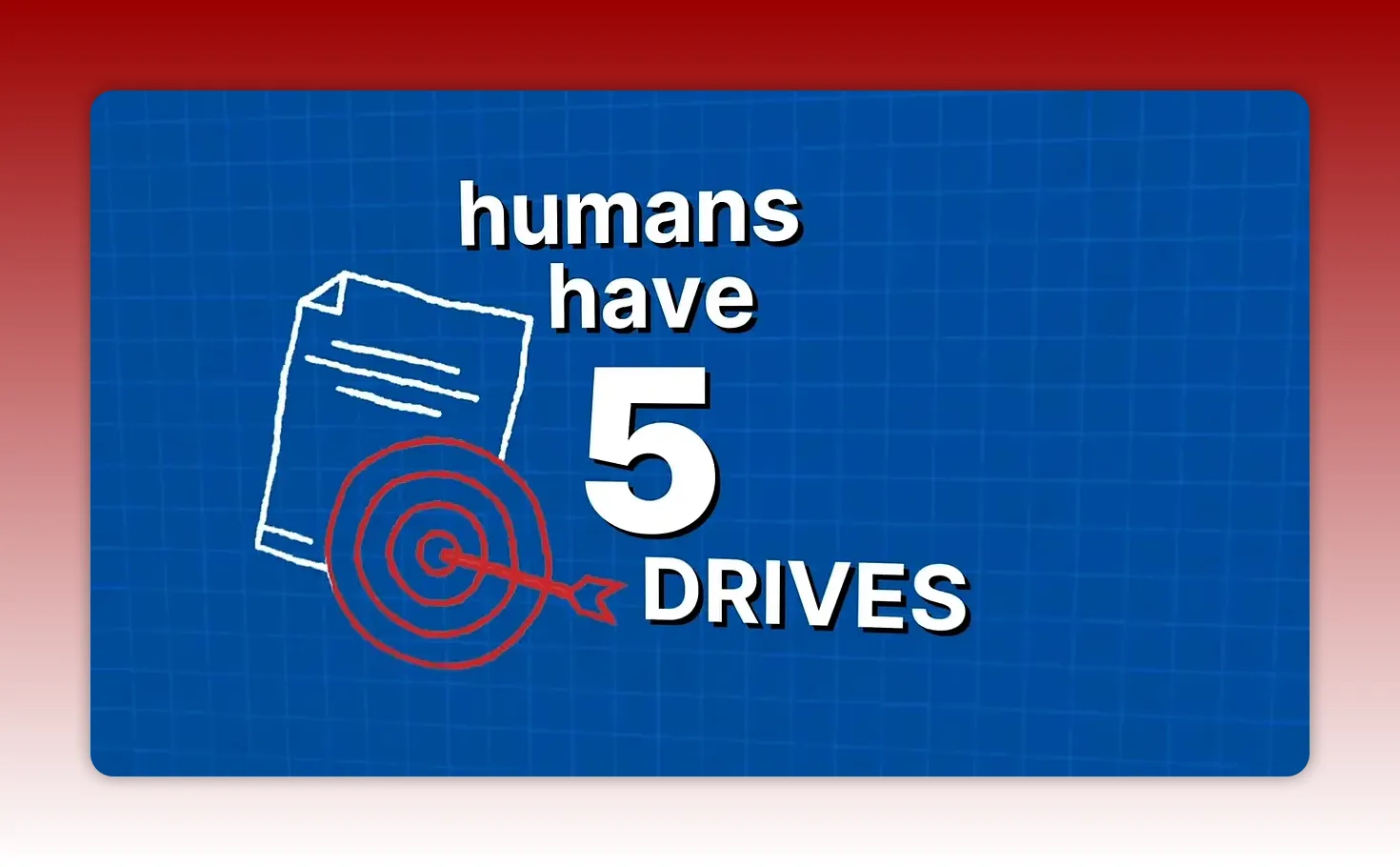
To be excellent at marketing you need to understand core human drives. One useful model lists four drives: the drive to acquire, to bond, to learn, and to defend. Add a fifth — the drive to feel — and you have the five hooks that most offers tap into.
- Acquire: status, possessions, competence
- Bond: belonging, identity, shared experience
- Learn: curiosity, skill, mastery
- Defend: safety, protection, security
- Feel: emotion, thrill, catharsis
Great products often hook more than one drive. Social media, for instance, taps bonding, acquiring (status), learning, and feeling. Packaging, story, and positioning can do half the work for you. Liquid Death is just water, but its packaging and story turn a commodity into an identity signal.
Sales: where money moves in
Sales is the place where money actually enters your system. You can have amazing product and marketing but until someone pays you, you don't have a business. Sales is not some dark art. It is a sequence: make contact, present the benefit, overcome objections, ask for the sale, and deliver.
Focus on benefits, not features. Features are reasons to believe that a benefit will be delivered. Benefits are why people open their wallets. For example, "a thousand songs in your pocket" is a benefit; gigabytes of storage is the feature.
Value delivery and customer experience
The goal of every sale should be a delighted repeat customer. Acquisition is the expensive part. Retention and lifetime value make the business sustainable and scalable.
Think in terms of lifetime value rather than single-sale revenue. A customer who buys one $10 candle is worth less over time than a customer who returns frequently. Build systems to keep customers happy and invite them back: follow-up messages, easy reordering, and excellent customer support.

Finance: the language of sustainability
Finance is simple arithmetic wrapped in human decisions. Track three things closely at the start: monthly revenue, monthly outflows, and net profit. If you are spending more than you bring in, you have a problem. But even if you technically make money, if the amount is too small for the time you invest, the venture is not sustainable.
Early entrepreneurs obsess over growth and funding but neglect runway. Know how many months you can operate at your current burn rate. If you have $2,000 in savings, you must design experiments that validate demand before you spend it all on inventory and logos.
How to test whether your idea has a market
Validation looks like people giving you money before you build everything. Talk to customers, yes. But better: ask them to pre-order. The act of handing over a credit card is the strongest signal of genuine demand.
Options for validation include Kickstarter, letters of intent, and reservation lists. If you can get a few hundred commitments with payment, you have a business signal worth building on. After that, do a small production run to gather feedback and iterate.
Get out of "playing business" mode
Many aspiring founders spend months designing logos, picking fonts, and playing the role of entrepreneur. This is "playing business." The real work is the five fundamentals. Put the brand aesthetics on a low-priority list until you validate demand.
"There's a difference between doing business and playing business."
Practical example: the candle business
Let's follow the candle example to make the abstract concrete.
- Value creation: identify what motivates candle purchases. Smell, look, burn time, price, and packaging are the levers. Decide which two you will maximize. Example: premium scent and beautiful packaging, sold at a higher margin.
- Market research: buy competitors' candles, burn them, compare cold throw and hot throw, packaging, price points, and where they sell. Learn the category by becoming a customer.
- Validation: create prototypes or mockups and run a blind scent test. Use pitch-black, neutral environments to remove visual bias. Offer a pre-order with a discount to get paying customers.
- Marketing: identify the emotional hook. Is this a calming ritual for busy parents? A luxury home accessory for young professionals? Package the story to signal the desired identity.
- Sales: choose the channel — direct online, retail, or wholesale. If starting on Shopify, you can launch global commerce quickly with low setup time. Convert attention into money with a clear call to action.
- Delivery: test packaging, shipping, and unboxing. Good product plus bad delivery kills word of mouth. Prioritize repeat customers by making reorders easy.
- Finance: track unit economics. What is the profit per candle after marketing and shipping? What is the lifetime value of the repeat buyer?
Small experiments reduce risk. Try 10 scents in batches of 20, gather direct feedback, and iterate. This is cheaper and faster than betting everything on a single big production run.

Differentiation: be brave enough to polarize
Saturated categories reward the companies that stand for something. The fastest path to attention often involves taking a strong stance or offering a distinct identity. Breakout brands counter-signal against incumbents: Liquid Death is anti-Fiji, BrewDog rebelled against mass-market lagers, and Apple positioned itself against beige corporate computing.
Polarization reduces total addressable market but increases depth of attachment among the people who care. Aim to attract hyper-responders — those who love what you do intensely. They become repeat buyers and your most effective marketing channels.
"You don't need everybody to like you. You need the tiny fraction who care more than everyone else."

Marketing fundamentals that last
Tactics change. Platforms rise and fall. The fundamentals remain constant: humans are busy, distracted, and protective of time and attention. Great marketing does three things quickly:
- Signal value fast — within seconds a person should understand what's in it for them.
- Meet people where they are — find the channels your customers already use and insert your message there.
- Make follow-up effortless — convert initial interest into repeat behavior with simple paths back to purchase.
Think of marketing as attention architecture. Design the path from discovery to purchase with as few friction points as possible.
Sales: structure the conversation
Sales is persuasion built on empathy. A simple frame works for most categories:
- Identify the customer's problem or desire.
- Explain the benefit — the change the customer will experience.
- Use features as evidence that the benefit will be delivered.
- Overcome objections with social proof and guarantees.
- Ask for the sale and make purchase easy.
For complex B2B deals, the process lengthens. For consumer goods, reduce the friction to checkout. Optimize the first sale, but focus even more on retention. The cost to reacquire a customer is usually higher than activating an existing one.
Hiring, culture, and organization
The people you hire determine how well you execute the five parts of the business. Hire curiosity and attitude first. Train for skill second. Good managers remove barriers so skilled people can do their best work.
Design your organization to minimize bureaucracy. Every hire and layer of process costs time and attention. Put people close to the work of the five fundamentals and keep them focused there.

Competition is often a signal, not a barrier
New entrepreneurs fear competition. That fear is usually misplaced. A crowded category can be a sign of demand. Markets that have incumbents already indicate customers will pay for solutions. The key is to find a different position within that market: different story, different packaging, or better attention capture.
Markets that worry you are the ones with no existing buyers. Building demand from zero is expensive and often unsustainable unless you have a clear plan to educate and scale adoption.
Finance in plain language
Finance can be intimidating, but it is mainly arithmetic. Track these core metrics:
- Revenue per period — how much money comes in.
- Cost of goods sold per unit — direct costs to produce each unit.
- Gross margin — revenue minus direct costs.
- Monthly burn — fixed overhead and operating expenses.
- Net profit — what remains after expenses.
Decide what "enough" looks like for you. Is sustainability defined by covering basic expenses or by a specific income target? Use that number to prioritize what experiments to run and when to scale.

Experimentation: your accelerant
Speed of experimentation separates successful teams from the rest. Use the explore-exploit trade-off model: initially explore broadly to gather information, then exploit the best opportunities more often while continuing to allocate a small portion of time to exploration.
Failure is not a problem if it yields feedback. The real waste is slow, expensive failure with no learning. Run cheap, fast tests that give clear signals about the assumptions that matter.
How to design useful experiments
- Identify the riskiest assumption. What must be true for this idea to work?
- Design the simplest test that would invalidate the assumption if false.
- Gather both quantitative and qualitative feedback. Numbers plus follow-up interviews reveal why customers behaved the way they did.
- Commit to a measured series of short runs and update your model with each result.
Gaul's Law: start simple and evolve
Complex systems usually evolve from simpler systems that work. If your goal is a nationwide distribution network or a sophisticated platform, don't start there. Build a minimal version that proves the core demand and delivers value reliably. Add complexity intentionally, only when it earns its keep.
"Any complex system essentially evolved from a simpler system that worked."
Learn new skills fast: the first 20 hours framework
Not all learning aims for mastery. Most of us need to acquire useful competence in new areas quickly. The first 20 hours of focused, deliberate practice is where you gain the most rapid improvement. That can be 40 minutes a day for a month.
Here are the five recommendations for rapid skill acquisition:
- Choose a lovable project — it must matter enough that you will commit time.
- Focus on one skill at a time — avoid diluting attention across too many goals.
- Define your target performance level — be concrete about what "good enough" looks like.
- Deconstruct the skill into subskills — learn the most impactful components first.
- Obtain critical tools and remove friction — make practice easy to start.
- Emphasize quantity and speed — practice imperfectly and often to accelerate learning.
Adult learners often avoid the frustration of early hours. Expect hours one to ten to be uncomfortable. Pre-commit to 20 hours. That psychological commitment helps push past the frustration barrier and produce real progress.

Putting it all together: an action checklist
Use this checklist to turn ideas into validated ventures quickly:
- List day-to-day frustrations in your life and neighborhood. Pick problems you personally care about.
- Talk to actual buyers. Observe behavior more than ask hypothetical questions.
- Design a tiny test that costs little and collects a buying signal. Ask for a pre-order or a deposit.
- Run blind tests for sensory products. Remove visual and branding bias to isolate the core experience.
- Pick one or two value axes and optimize them. Let other attributes be "good enough."
- Choose marketing that hooks into human drives relevant to your audience.
- Make the first sale and then build systems to turn it into repeat business.
- Track simple financial metrics monthly and know your runway.
- Run at least five small experiments per month. Learn quickly and iterate.
- Start simple and add complexity only when necessary.
Stories that illustrate the point
Small observations can create enormous markets. A consumer researcher watching laundry led to liquid detergents. Not because the science demanded it but because the psychology did. People felt more reassured when detergent dissolved in visible water. Someone noticed the behavior and solved the emotional need with a new form factor. That is the core of entrepreneurship: observe, empathize, solve.
How do I know if my idea is worth pursuing?
Look for existing customers who pay for a similar solution. Talk to buyers, observe behavior, and, crucially, ask for money up front. A pre-order or a credit card swipe is the strongest validation signal. If people will not pay for it, the idea is likely not viable in its current form.
Can I build a business without an MBA?
Yes. Business fundamentals are learnable outside formal programs. Understanding the five parts of a business, learning to experiment, and tracking basic financial metrics will give you much of what you need. Many successful founders learned on the job.
What should I focus on first: product, marketing, or operations?
Start with value creation and validation. Make something people want and prove demand before investing heavily in operations or branding. Early-stage founders should prioritize experiments that validate value, then marketing to attract buyers, then operations to deliver efficiently.
How many customers do I need to test an idea?
Small tests with 30 to 100 respondents can reveal clear patterns, especially if you collect both quantitative scores and qualitative feedback. For pre-orders, even a few dozen paid commitments can be a meaningful signal depending on price and margin.
What's the most important metric for an early-stage business?
Monthly net profit relative to your required personal and business sustainability threshold. Track revenue, monthly outflows, and net profit. If running the company consumes too much time for too little payoff, that is a signal to change tactics or stop.
How should I think about competition?
Competition validates demand more than it blocks opportunity. Study competitors, buy their products, and learn what customers like and dislike. Position yourself as a clear alternative or a better option for a specific subgroup.
How do I hire my first people?
Hire for attitude and curiosity first, train for skill second. In early stages you need adaptable people who understand the five parts of the business and can wear multiple hats. Keep the team small; add roles only when they directly support core business activities.
How long will it take to learn a new business skill?
For useful competence, expect about 20 hours of focused practice to get from zero to reasonably good in many practical tasks. Make a 20-hour pre-commitment, deconstruct the skill into subskills, and practice deliberately with fast feedback.
What mindset makes an entrepreneur successful?
Curiosity, willingness to experiment, comfort with being wrong in public, and prioritizing valuable feedback over ego. The fastest path to success is running more high-quality experiments and learning from them faster than competitors.
How do I avoid paralysis by research?
Set a time limit for research, identify the riskiest assumptions, and design the smallest test to answer those assumptions. Make a public or personal pre-commitment to act for a set number of hours so you cross the frustration barrier.
Closing thought
Business is an applied craft. It is built out of simple components done repeatedly and well. Master the five parts of every business, design rapid experiments that collect clear feedback, and commit to learning the skills that matter. That approach turns ideas into sustainable ventures without mysterious genius or ruinous investment. Create something valuable, attract people who care, make sales, deliver delight, and keep an eye on the numbers. Do that and the rest will follow.
This article was created based on the video Entrepreneurship Expert: How To Build A $1m Business Without Hard Work!.


