
Strategy often sounds like corporate jargon: long plans, mission statements and meetings where everyone nods and nothing changes. At its core, strategy is much simpler and far more useful. Strategy is a set of clear choices about where you will put your effort and where you will hold back. For small businesses and nonprofits that must make every dollar and hour count, clarity about these choices can be the difference between survival and sustainable growth.
This guide lays out a practical five-question framework that defines what a real, actionable strategy looks like. Each question is paired with concrete examples, practical advice and steps you can apply now. The framework helps you focus scarce resources, design the capabilities you need and build the management systems that lock in the improvements you deliver.
The Five Choices That Make Strategy Work
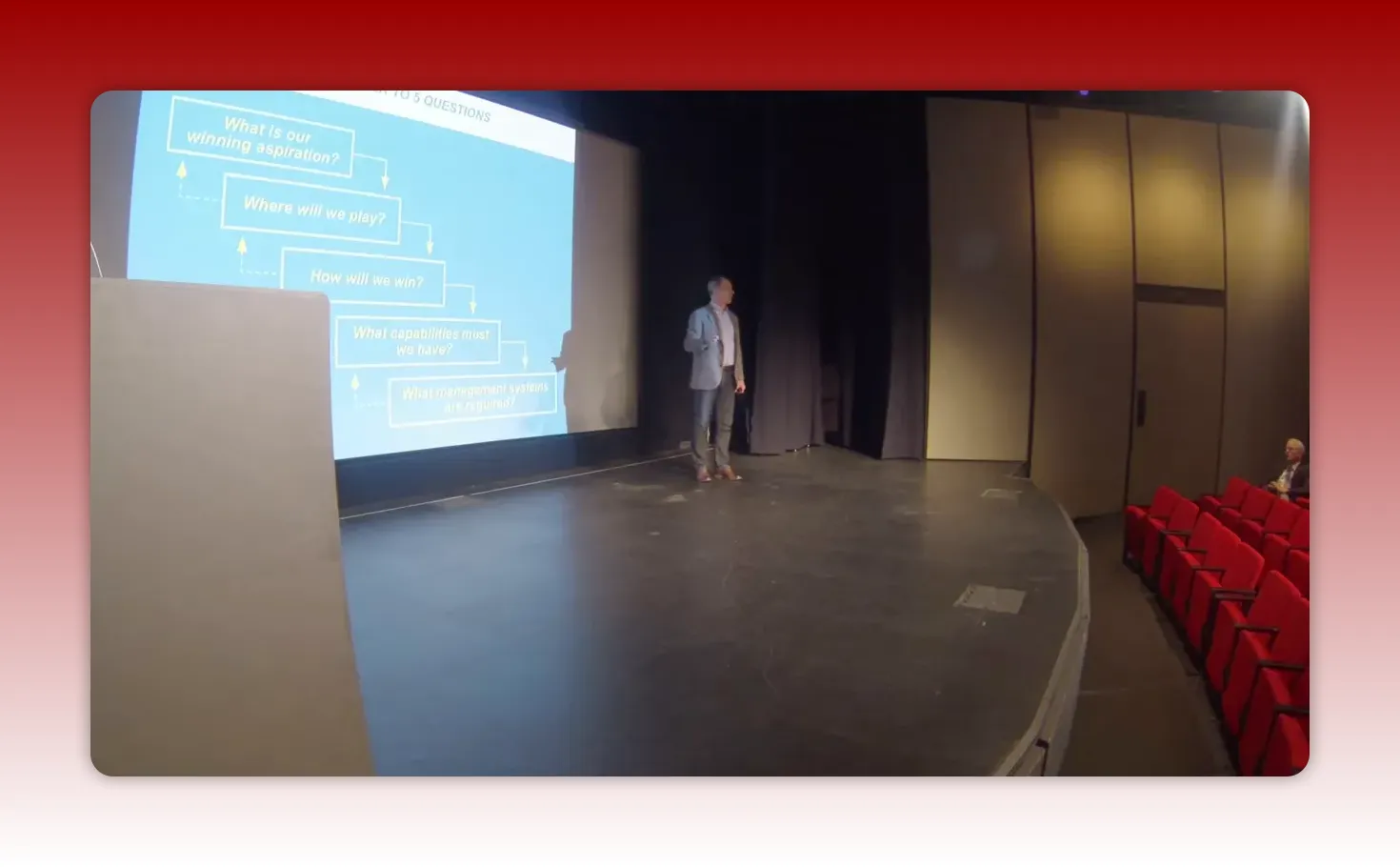
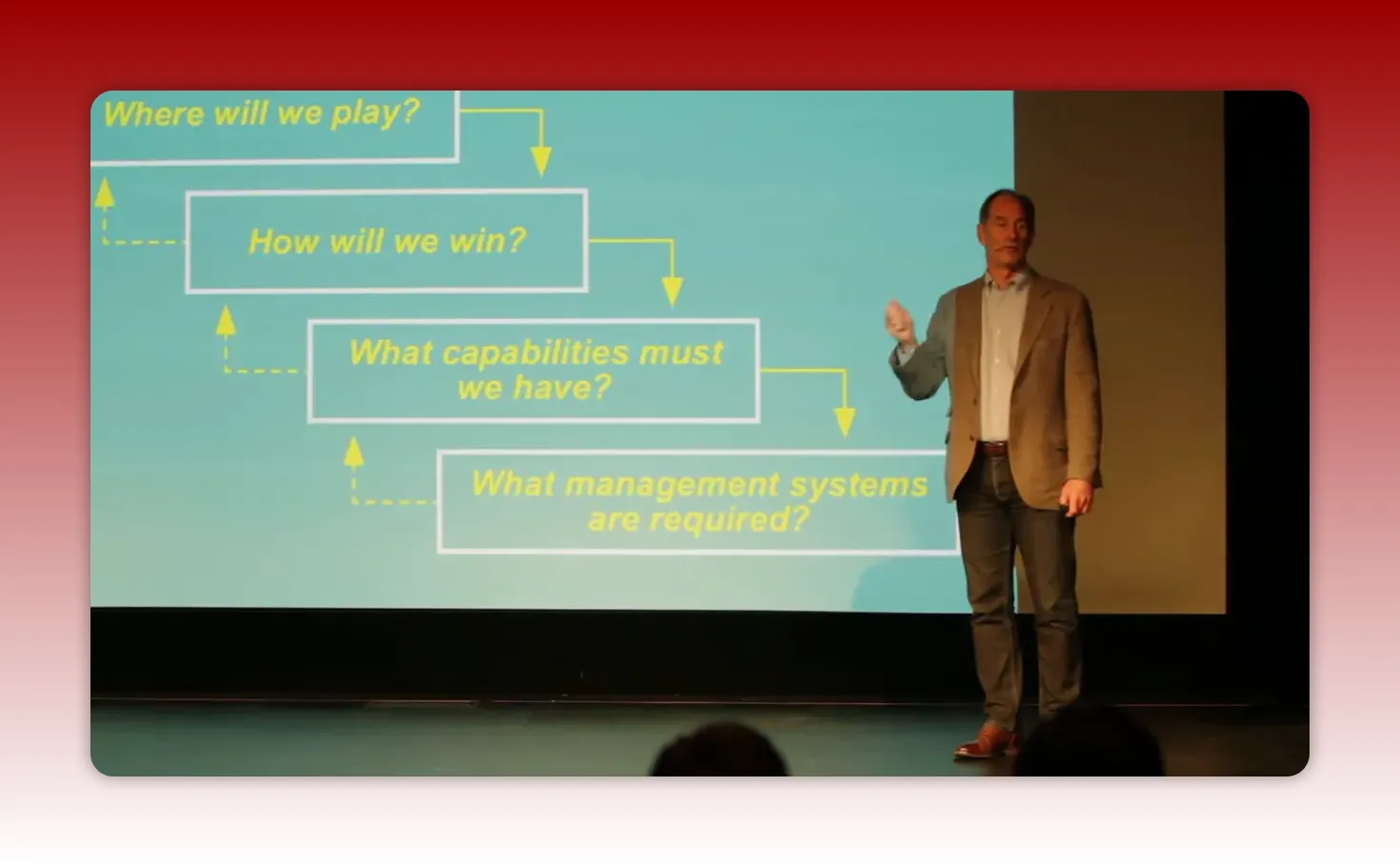
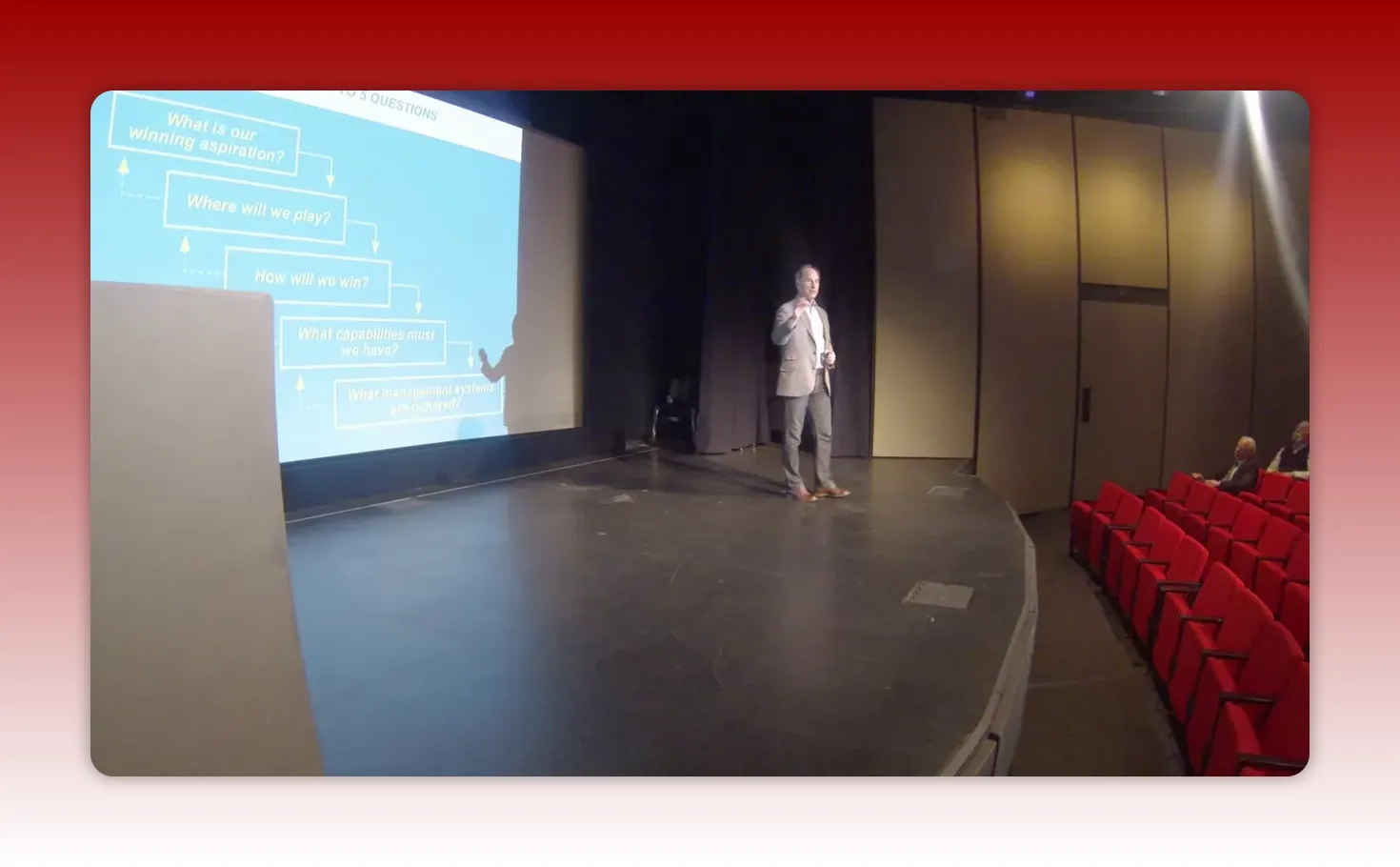
A strategy that actually guides decisions and produces results answers five interconnected questions. These are not theoretical—they are everyday choices that determine how an organization competes. Get these five questions aligned and you have a strategy that shortens the odds of success.
- Winning aspiration — What does winning look like for us?
- Where to play — In which market, segment or geography will we compete?
- How to win — What unique approach will let us win in that space?
- Core capabilities — What must we be able to do better than others?
- Management systems — What processes, metrics and routines keep us on track?
Strategy is about choosing to do some things and not other things.
That sentence captures the practical heart of strategy. For small organizations, forced tradeoffs are not optional. Saying yes to one focus means saying no to many others—and saying no deliberately is how you build the capacity to win where you chose to play.
1. Winning Aspiration: Call the Shot
A winning aspiration is not a motivational platitude. It is a crisp statement of what success looks like in a way that clarifies whether a decision moves you closer to the win. Too many organizations pick non-threatening goals like "improve customer satisfaction" without specifying scale, timeframe or who they are trying to beat.
For small businesses and nonprofits, an effective aspiration does three things:
- It answers what success will look like in measurable or observable terms.
- It motivates the team by being ambitious enough to matter.
- It creates a filter for decisions—if a choice does not move you toward the aspiration, you probably should not do it.
Example: imagine a neighborhood food bank. A weak aspiration might be "serve more families." A strong aspiration would be "increase the number of unique households we serve by 40% within 12 months while reducing average wait time to under 15 minutes." The second statement tells you what success looks like and what to prioritize.
How to set a tight winning aspiration
- Pick a timebound outcome (12 months, 3 years).
- Use a clear metric tied to mission or revenue (households served, monthly recurring revenue, donor retention rate).
- Make it stretch but believable.
Having an honest aspiration also changes culture. If your aspiration is to be the best at a specific local market or audience, team members stop pursuing easy, low-impact projects that do not move the needle.
2. Where to Play: Narrow Your Field
The market is bigger than you need. Choosing where to play means defining the specific customers, channels, product lines, service areas and geographies you will focus on. The sharper the focus, the more concentrated your resources can become—which matters when budgets and staff are tight.
Intuit provides a classic illustration. Quicken began as personal financial software. After repeated customer calls requesting small-business features, Intuit made a conscious choice to expand "where to play" and built QuickBooks. That product now dwarfs the original business because the company deliberately chose a more fruitful playing field.
For a small business or nonprofit, "where to play" can be surprisingly specific: a demographic slice, a particular neighborhood, a single industry vertical, or a particular channel like direct sales vs online marketplaces. The key is to pick a field that both aligns with your aspiration and is manageable given your resources.
Questions to define where to play
- Who are the customers we actually serve best?
- Which channels give us the highest margin or impact?
- Which geographic area can we realistically own or dominate?
- What product or program lines should we expand versus exit?
Choosing a narrower "where" is often the fastest route to growth. A focused market position lets you tune product, messaging and operations to the needs of a tight audience and out-compete broader generalists.
3. How to Win: Create a Distinctive Approach
Where to play defines the field. How to win is the unique approach that will let you beat competitors in that field. This is your value proposition translated into operational choices and repeatable experience.
Starbucks succeeded not because coffee is rare but because it created a "third place" between home and work—a consistent experience that customers wanted to inhabit. In a similar way, small organizations can win by carving out a way to be meaningfully different for their chosen customers.

Examples of "how to win" for small organizations
- Service differentiation: Faster response, friendlier interactions, or deep personalization.
- Product specialization: Focus on one deep pain point rather than a broad set of features.
- Channel advantage: Use partnerships, local networks or events that competitors ignore.
- Cost leadership: Be the low-cost provider in a local market where customers care about price.
Your "how" should be credible: if you claim you'll be the fastest, you must design systems that deliver speed consistently. If you claim a premium experience, the details—packaging, follow-up, service—must reinforce that promise at every touch.
4. Capabilities: Build the Things You Must Do Well
Once you know where you will play and how you will win, list the capabilities that are essential to execute that game plan. Capabilities are what people in your organization must be able to do repeatedly and exceptionally.
When Burberry shifted to target younger luxury buyers, leadership realized they needed new capabilities: social-first marketing, digital commerce, and bottom-up innovation practices. They hired new skills and created new teams. Small organizations must do the same kind of honest inventory.
How small teams can build capabilities without big budgets
- Prioritize three capabilities that have the highest impact on your aspiration.
- Buy or borrow capabilities via partnerships, freelancers or shared services rather than building everything in-house immediately.
- Train and reassign existing staff where possible; capability building often starts with re-purposing motivated people.
- Measure capability progress with practical metrics: response time, conversion rate, donor retention, program completion.
Capabilities are not just skills. They are combinations of people, technologies and regular processes that produce consistent outcomes. The more precise you are in naming them, the easier it becomes to hire, partner or train the skills you need.
5. Management Systems: Make Good Behavior Repeatable
A capability without a system often fades. Management systems turn capabilities into long-term advantages by creating routines, incentives and feedback loops that reinforce desired behavior.
Four Seasons uses a deceptively simple management system called the glitch report. Every complaint becomes a documented glitch that the team meets on daily and weekly cycles to fix. The goal is not to hide problems but to surface them and ensure service recovery. That kind of discipline is what allows Four Seasons to charge a premium and expect consistent service across locations.
Management systems that work for small organizations
- Daily or weekly standups focused on outcome-based metrics (not just activity reports).
- Issue logs where every problem has an owner and a deadline for resolution.
- Simple dashboards that show leading indicators relevant to your aspiration.
- Postmortems for major misses with public action items and follow-up checks.
Systems do not need to be complex. The trick is to make them visible, actionable and consistent. Small teams can gain a big advantage by being disciplined about a few high-leverage routines that larger organizations struggle to sustain.
Putting It All Together: A Product-Level Example
The Olay turnaround offers a compact case study that shows how the five choices fit together. Olay was a stagnant, low-price mass brand whose customer base was aging. Leadership set a winning aspiration: make Olay one of the most important skincare brands in the world.
Where to play shifted from older-skewing wrinkle treatments to the underserved 35-50 segment. How to win meant new, better active ingredients, plus an innovative "mastige" (mass + prestige) experience in mass channels. Capabilities had to be built to work with retailers, beauty editors and influencers. Management systems had to be changed to allow higher spending and different account models.
The result: Olay moved upmarket without abandoning mass channels and became the global skincare anchor for the company. The lesson for small organizations is the same: a coherent set of choices, aligned from aspiration to systems, multiplied impact.
Why Linking These Five Questions Is the Hard Part
Each of the five questions is simple by itself. The difficulty is ensuring they fit together and reinforce each other. A bold aspiration without a believable where to play is fantasy. A brilliant how-to-win without the right capabilities is a wish. Capabilities without systems will slowly erode.
Strategy is not linear. It is an iterative design task. Start with a draft aspiration, test whether your where and how can plausibly get you there, then revisit and iterate. This looping is what turns incoherent ambition into a practical plan.
Practical Steps to Build a Strategy in a Weekend
You do not need to spend months crafting a strategy document. For small teams, follow this practical sprint to produce a usable strategy in a day or a weekend.
- Draft a one-sentence winning aspiration. Make it measurable and timebound.
- Define one clear where to play. Pick the customer segment, channel or geography that best aligns with the aspiration.
- Articulate one to two ways to win. Be definitive: faster, cheaper, more convenient, more trusted, more beautiful.
- List three capabilities to build or buy. Prioritize the ones that most directly enable your how to win.
- Create two simple management routines. Example: daily standup focused on two metrics and a weekly issue log with owners.
- Reverse-engineer the plan. For each choice, ask, What would have to be true for this to work? List the assumptions and the signals you will watch.
This sprint produces a living strategy, not a document to file. The reverse-engineering step is critical because it gives you a monitoring plan: if an assumption fails you will notice fast and can adapt.
Reverse Engineering: Watch the Signals
Good strategy planning names the assumptions that must hold for the plan to work. Once you have those assumptions, monitor them. Too many organizations treat the strategic plan as sacred rather than as a hypothesis about how the future will play out.
Examples of strategic assumptions small organizations might track:
- Customer adoption rate of a new product in the first 90 days.
- Average donation size and repeat donor rate month over month.
- Retail partner willingness to create dedicated shelving for your product.
- Unit economics assumptions for sustaining a new delivery model.
If the data disagrees with your assumption, revisit the corresponding strategy choice. The earlier you spot a mismatch, the lower the cost of adjustment.
Emergent Strategy vs. Intentional Choice
Strategy is not a fetish for five-year plans. The world changes, and strategies often evolve. But emergent strategy—letting every day dictate your direction without a clear grounding—becomes an excuse for lack of thinking.
The smart path combines both: design an intentional strategy based on your best logic and assumptions, then remain alert to signals that force an update. That way you are neither paralyzed by a rigid plan nor blown around by whims.
Design Thinking and Abductive Logic: Where New Ideas Come From
Large organizations often rely on inductive and deductive reasoning—analysis of existing facts and careful logical progression. Innovation and strategic leaps frequently require a different kind of reasoning: abductive logic.
Abductive logic is the disciplined leap of imagination that moves from mystery to a plausible hypothesis. Design thinking operationalizes this by combining deep user insight with imaginative framing. For small organizations, abductive leaps are the source of differentiated ideas that can become the basis of a winning strategy.
Designers and analytically oriented teams are complementary. Small organizations that combine analytic rigor with organized imagination get better results than teams stuck in one mode. Designers should learn enough business language to stay in the conversation. Business leaders should learn enough design discipline to evaluate and harness abductive leaps.
Action Checklist for Small Businesses and Nonprofits
Use this concise checklist when you next review strategy with your team.
- Write a one-sentence winning aspiration with a metric and timeframe.
- Define the exact where to play: customers, channels, geography.
- Choose the how to win: one or two clear differentiators.
- List three essential capabilities and how you will acquire them.
- Specify two management routines to make performance visible and fixable.
- Reverse engineer assumptions and set monitoring signals with owners.
- Set a monthly ritual to re-check that the five elements still fit together.
Common Pitfalls and How to Avoid Them
Pitfall: Vague aspirations
Fix: Make the aspiration measurable and timebound. Replace "grow" with "grow by X% in Y months."
Pitfall: Trying to be everything to everyone
Fix: Narrow where to play. Focus on one customer slice where you can demonstrate excellence quickly.
Pitfall: Fancy initiatives that lack follow-through
Fix: Tie initiatives to capabilities and embed accountability in management systems.
Pitfall: Waiting for perfect data
Fix: Use logical assumptions and name them. Watch the signals and iterate as data arrives.
Specific Tools Small Teams Can Use Today
- One-page strategy canvas: Summarize the five choices on one page and pin it in the team area.
- Assumption tracker: A simple spreadsheet listing assumptions, owner, metric to watch and threshold for action.
- Weekly glitch log: A shared document where every complaint becomes a tracked fix.
- Customer discovery sprints: Short, time-boxed interviews or tests to validate key assumptions.
Leadership Behavior That Makes Strategy Real
Leaders make strategy work when they are willing to set bold aspirations, admit what they do not know and be relentless about linking strategy to day-to-day execution. Two behaviors matter most:
- Decisive choice: Choose where to play and what not to do. If everything is important nothing is important.
- Visible accountability: Make progress visible, celebrate small wins and learn publicly from misses.
Five-Minute Strategy Review Template
Use this quick template at the start of any team meeting to keep strategy alive.
- Restate the winning aspiration in one sentence.
- Confirm the where to play and the how to win.
- Report one capability metric and one system metric (e.g., response time, issue backlog).
- Call out one assumption you are watching and the latest signal.
- Decide one action for the next week that moves the strategy forward.
Closing: Strategy as Creative Design
Strategy is not solely an analytic exercise nor merely a plan you execute blindly. It is a creative act that shapes what could be by making disciplined choices. For small businesses and nonprofits, strategy is most valuable when it helps you choose what to do and what to avoid so that your limited resources are concentrated where they matter most.
Be bold about your aspiration, precise about where you will play, explicit about how you will win, honest about the capabilities you need and disciplined about the systems that make good work repeatable. Then iterate. Strategy is a living thing. If you adopt these five choices as a decision-making filter, your organization will be far more likely to deliver the impact you want.
What are the five choices of strategy and why do they matter?
The five choices are winning aspiration, where to play, how to win, capabilities and management systems. They matter because they convert high-level goals into a set of linked decisions that determine where to focus resources, what skills to build and which routines will make improvements stick.
How can a small nonprofit set a realistic winning aspiration?
Pick a measurable outcome tied to your mission (for example, "increase stable housing placements by 30% in 12 months") and be specific about the timeframe and the population you will prioritize. That sharpness helps your team choose programs, partners and fundraising priorities that are aligned.
What if we do not have enough data to make strategic choices?
Use logical assumptions based on the best available information. Make those assumptions explicit, decide which signals you'll monitor, and run small tests to gather evidence. Strategy is about shortening odds, not guaranteeing outcomes.
How often should we revisit our strategy?
Revisit the fit among the five choices monthly or quarterly in a short format. Continuously monitor key assumptions and have a trigger threshold that prompts a deeper review if signals move beyond acceptable bounds.
What simple management system can a small team implement this week?
Start a weekly glitch log or issue tracker. Record every problem, assign an owner and set a deadline for resolution. Review the log in a short weekly meeting and escalate recurring items to plan capability changes.
How do we combine design thinking with business planning?
Use abductive logic to generate hypotheses and creative options based on user insights. Then apply analytic thinking to test assumptions, measure results and scale the ideas that show promise. Designers should learn enough business lingo to stay in the conversation; business people should practice structured imagination.
Recommended Next Steps
- Create a one-page strategy canvas and pin it in your shared workspace.
- Run a one-day strategy sprint with the five-choice checklist and one customer test.
- Set up an assumption tracker and pick three early-warning metrics to watch.
- Implement one simple management routine to make results visible every week.
Strategy is a practical discipline. For small organizations, the most valuable strategy is the one that is actionable, visible and iterated. Choose deliberately, build capability incrementally, and design systems that make your best work repeatable.
This article was created based on the video Roger Martin's How Strategy Really Works Lecture at ArtCenter.


