Scaling a service business to a million dollars a year does not require a huge team, relentless custom projects, or reinventing what you do. The fastest, most practical path is to productize your expertise. Productizing means packaging the repeatable parts of your service into a predictable, sellable product so you can deliver the same result faster, with less friction, and to more people without burning out.
The five-stage blueprint that actually works
This is a stage-based approach. Each stage has a specific bottleneck to solve and clear tactical steps to move to the next revenue band. Follow the stages in order and you get predictable progress:
- Stage 1: Offer positioning — aim for a steady $10K per month.
- Stage 2: Systematize delivery — make delivery repeatable; aim for $30K to $40K per month.
- Stage 3: Productize delivery — create a Done With You product alongside Done For You; aim for $50K+ months.
- Stage 4: Minimum marketing system — create predictable lead flow; aim for $84K per month (about $1M per year).
- Stage 5: Sales machine — build a repeatable sales process that scales to $100K+ per month.
Below I unpack each stage with concrete steps, templates, and what to measure so you can replicate this path without guessing.
Stage 1 — Offer positioning: get crystal clear on who you help and what you promise
The most common problem at the start is selling everything you can do instead of a single, measurable result. That messy menu sends a confusing signal to the market. Prospects ask "what exactly do you do?" and even satisfied clients struggle to refer you, because your offer is different for every customer.
The fix is not a new product. The fix is a clear promise.
Three-step positioning process
- Identify who you already get results for. Look at your past clients and list the types of businesses or people you consistently moved forward. This is often narrower than you think.
- Define the biggest, most valuable result they want. Pick one measurable outcome. Revenue, pipeline growth, number of qualified leads, number of sponsor deals landed, first keynote delivered — pick a result that matters and can be tracked.
- Use the framing: "I help [avatar] achieve [specific result]." Keep it short, concrete, and measurable.
Examples that communicate quickly and sell better
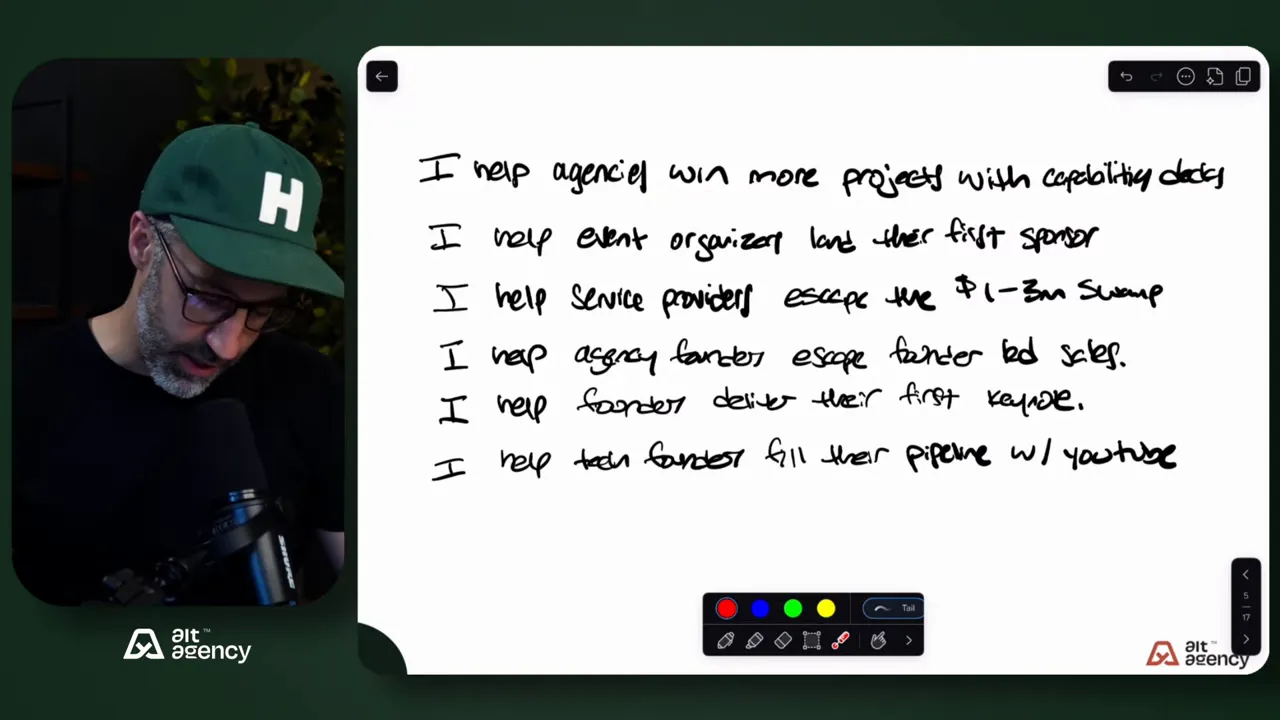
- Lindsay: "I help agencies win more projects with capabilities decks."
- Chris: "I help event organizers land their first sponsor."
- Nathan: "I help service providers escape the 1 million to 3 million success swamp."
- Corey: "I help agency founders escape founder-led sales."
- Rich: "I help founders deliver their first keynote talk."
- Alec: "I help tech founders fill their pipeline with YouTube."
Why this works: A tight position does three powerful things. It makes your offer easier to describe. It helps the right prospects find and understand you. It makes referrals simple. With one clear promise you stop competing on features and start competing on outcomes.
Outcome at this stage: a stable $10K per month baseline if you consistently pitch the single result to the right people. Team size: often just you, full time, possibly supported by a virtual assistant.
Stage 2 — Systematize delivery: make every project feel predictable
Once positioning is clear, the new challenge is repeatable delivery. Most services still feel custom. You react to client requests, scope bloat appears, and timelines stretch. Systematizing means mapping every step and packaging it into a three-phase flow so delivery is predictable and margin improves.
Three practical steps to a system you can sell around
- List every step you take to deliver the result. Be brutally honest and granular. From kickoff to final deliverable, write down each task, decision, and handoff.
- Group them into three logical phases. Think beginning, middle, and end. Phase one is discovery and alignment. Phase two is execution. Phase three is polish, handoff, and measurement.
- Name the process and visualise it. Give your method a short, memorable name and create a one-page visual that walks prospects through the three phases so they can see themselves inside it.
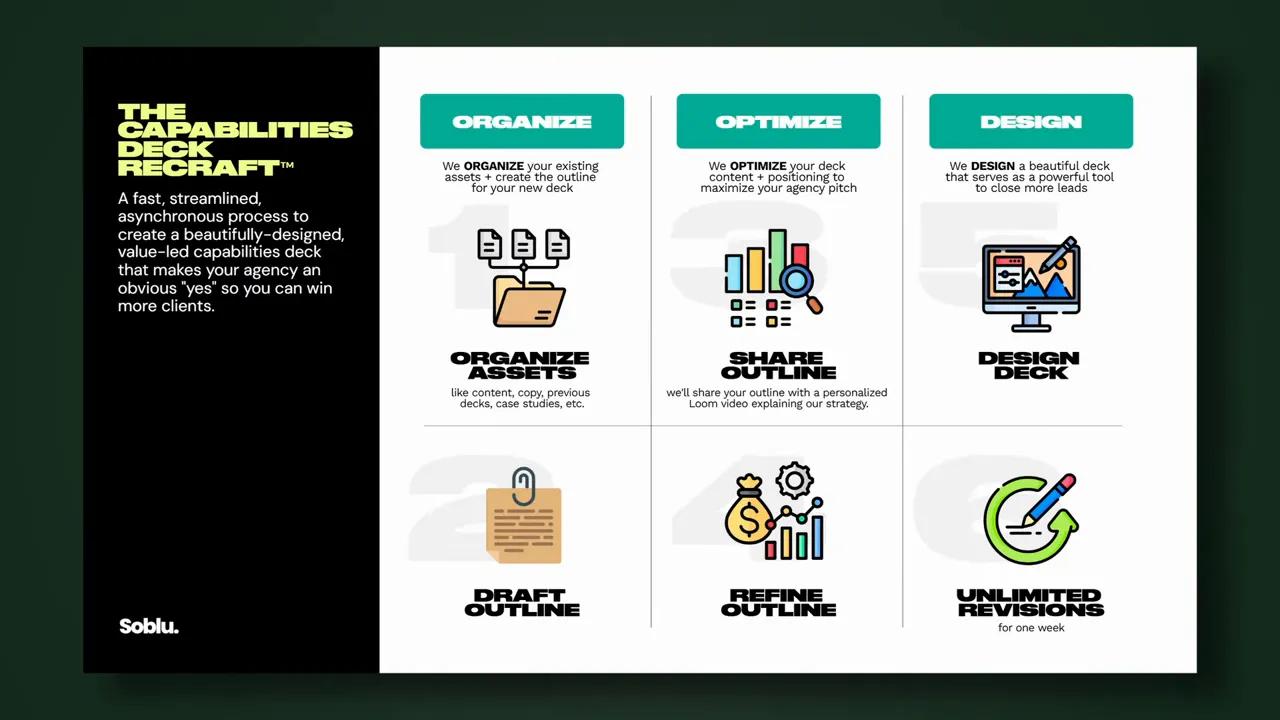
Examples of phase-driven frameworks: capability decks, sponsorship funnels, pipeline playbooks, founder sales frameworks. Visuals are critical. A prospect should be able to look at a one-page diagram and instantly understand the path from problem to outcome.
Benefits: predictable capacity, tighter scope, faster delivery, clearer estimates, and fewer scope disputes. This stage should reliably put you in the $30K to $40K monthly band without being maxed out.
Team composition: still lean. You might be supported by a VA and one or two fractional contractors for overflow. The process itself becomes a selling point because prospects can buy into the way you work, not just what you produce.
Stage 3 — Productize delivery: create a Done With You option
Systemizing delivery solves quality; the next ceiling is capacity. Hiring more people to deliver the same custom work scales cost and headaches. The smarter move is to turn delivery into a product with two vehicles: Done For You and Done With You.
Why Done With You matters: it delivers the same result at a lower price point and requires less one-to-one labor from you. It becomes a highly leverageable vehicle that multiplies revenue without linearly increasing headcount.
How to launch a Done With You product fast
- Map your Done For You process to a teachable live program. Outline a 6 to 12 week group experience based on your three-phase delivery model.
- Pre-sell the prototype to existing or past clients and your email list. Do not build before you sell. Use pre-sales to validate pricing and messaging and to fund development.
- Deliver the prototype live. Run live training sessions, a weekly Q and A, and iterate as you go. Treat early cohorts as paid research and development.

What to do during the prototype
- Deliver live core lessons once per week and run a live group Q and A midweek.
- Collect recordings, templates, checklists, calculators, and any assets created during coaching.
- Refine the curriculum based on real client questions and friction points.
- Turn repeatable components into videos, guided templates, and automations for the next cohort.
Why pre-selling is the secret: you get cash up front, real users, and live feedback. If you sell three, five, or ten spots into a prototype, you create a cash injection and your first wave of members. Those initial members also become case studies and social proof.
Capacity planning tip: as you launch a Done With You product, you will likely need to clean house. Replace legacy clients who drain capacity with productized buyers who fit the future of your business. It is better to have $50K a month in the right work than $30K in projects that wear you out.
Team for Done With You: keep the VA. Add a fractional coach or repurpose existing contractors to host live Q and A or module-specific calls. Leverage staff for implementation support rather than scaling headcount to deliver bespoke projects.
Stage 4 — Minimum marketing system: predictable lead flow to reach $1M per year
With productized offers and predictable delivery in place, the bottleneck becomes lead flow. The goal here is not viral stardom. It is a sustainable, repeatable marketing system that consistently fills your pipeline with qualified prospects.
What a minimum marketing system looks like
- Main traffic channel. Pick one primary channel to build at scale: LinkedIn, YouTube, Instagram, or Facebook. Focus beats fragmentation.
- Short-form content to build reach. Create frequent, short content to practice messaging and build recognition quickly.
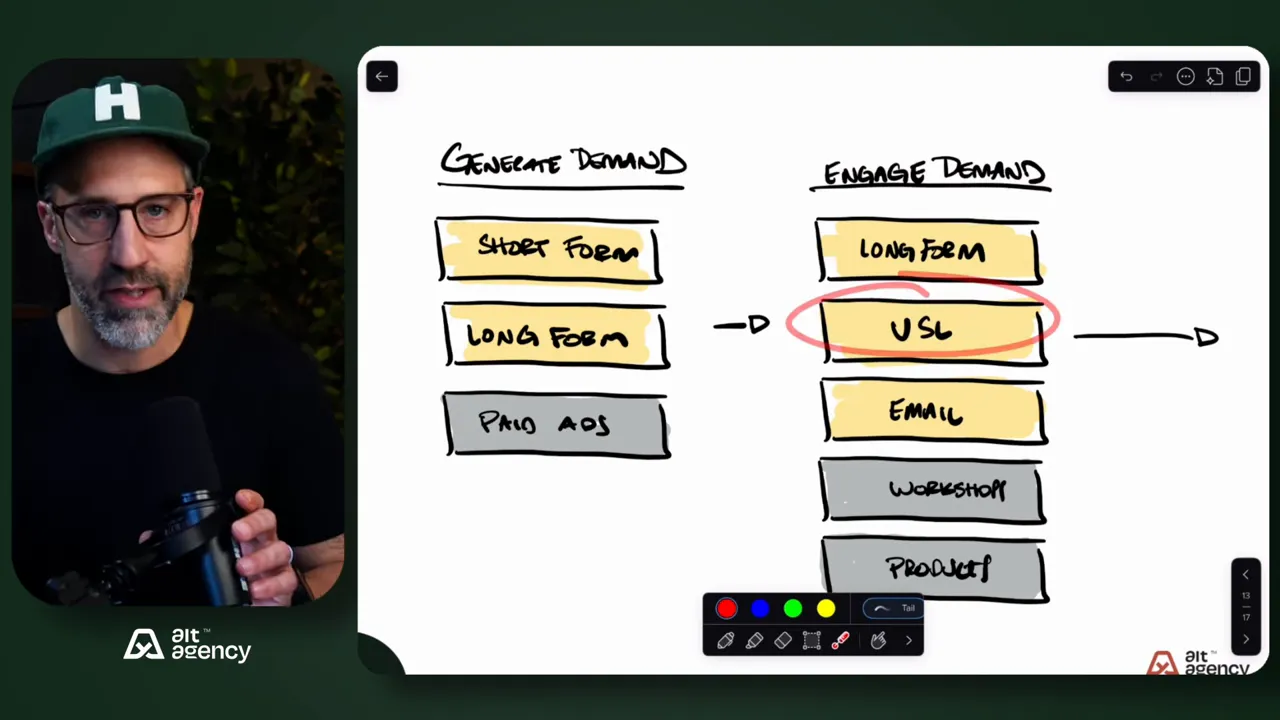
- Long-form conversion asset. Use a video sales letter or long-form content piece that explains your signature framework and converts viewers to leads.
- Capture contact information. Drive traffic to your VSL or long-form page and capture name and email so you can follow up.
- Email nurture cadence. Send consistent value emails to get people to watch your VSL and book calls. One to three value emails per week is a solid starting point.
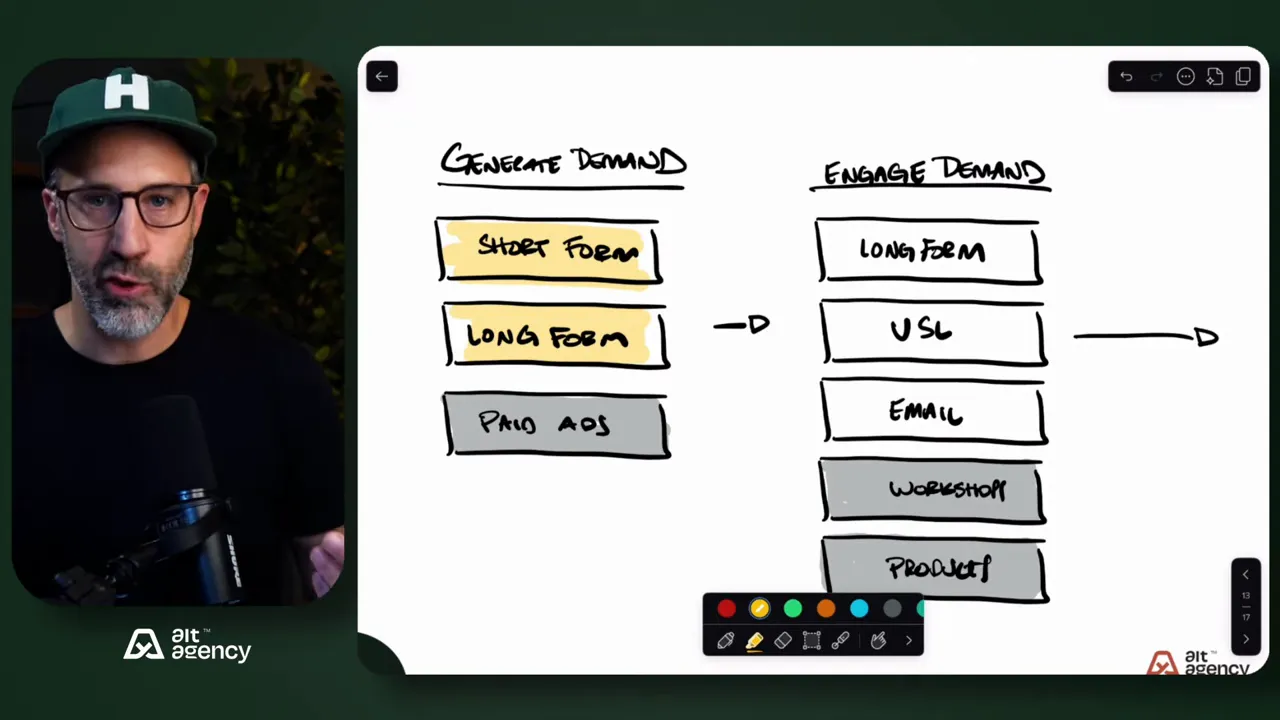
Why this sequence works: short form content generates demand and sharpens messaging. Long form content closes the seller's education gap and moves curious people to action. Email keeps people engaged and increases conversion to calls and purchases.
When to add paid ads: only after organic messaging is proven and you have a repeatable funnel. Ads amplify a funnel that already converts; ads rarely fix a broken message.
Three initial tactical steps
- Choose one traffic channel and commit to consistency.
- Send traffic to a long-form conversion video or VSL that explains your process and prompts a call.
- Collect leads (name, email, optional phone) and run an email nurture sequence with clear CTAs to book a call.
Expected impact: when done consistently this minimum marketing system can take you to roughly $84K per month — which is about $1M per year. At that scale you will be attracting qualified prospects instead of chasing one-off leads.
Team responsibilities at this stage
- Video editor to produce 1 to 4 videos per week.
- CRM manager (VA or part-time) to manage lead capture and email sequences.
- Someone to manage ads if you run them later.
Stage 5 — A sales machine that scales to $100K+ months
Leads are now flowing, but inconsistent closing will limit growth. The problem is not always the offer. Often it is the sales execution. When calls are handled differently each time, conversion rates swing dramatically.
Structure your sales system into three repeatable steps
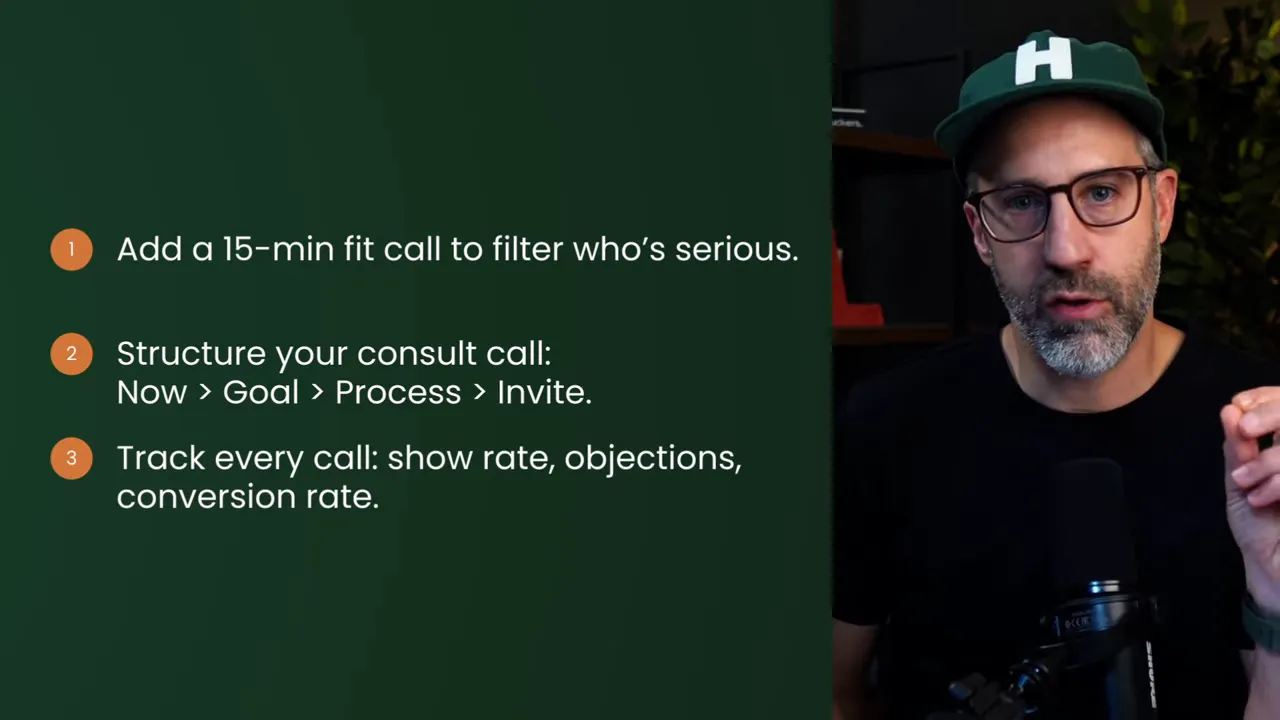
- Fit call (15 to 20 minutes). A quick audition to determine if the prospect matches your productized offer. Identify the problem, goals, roadblocks, and timing. If they are a fit, book a consult. If not, keep them in the ecosystem or refer them elsewhere.
- Consult or demo call. Reiterate what you learned, walk the prospect through your signature framework, demonstrate how it closes their gap, and make the offer to join Done For You or Done With You.
- Track every call and metric. Track show rates, objections, close rates, average deal size, and common friction points in a spreadsheet so you can find the next bottleneck and iterate.
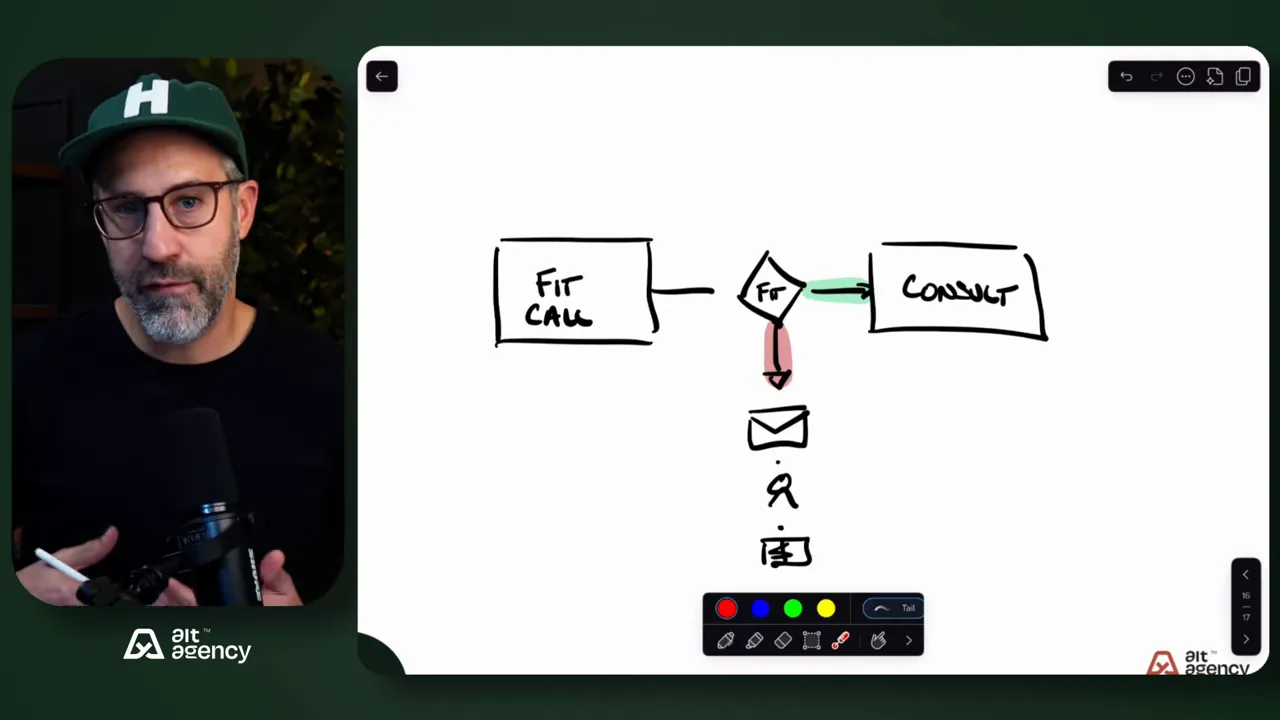
Why a fit call matters: a 15 minute fit call is an efficient filter. It saves the longer consult for qualified prospects and increases conversion by ensuring the consult is focused on motivated buyers. Think of it as a brief audition where you decide yes or no.
What to standardize in every sales interaction
- Opening framing: who you help and the single result your product is built to deliver.
- Discovery questions that uncover the goal, current state, and blockers.
- Rehearsed walkthrough of the three-phase framework so prospects see the path.
- Clear offer, pricing, and decision timeline with next steps.
Measure and iterate
Put every call into a spreadsheet. Track:
- Number of leads who booked fit calls.
- Show rate for fit calls and consults.
- Close rate by stage.
- Top objections that stop closes.
- Average deal value and time to close.
Why documentation helps you scale: when you have recordings, scripts, and templates for what works you can hire someone to replicate your wins. That is how you go from doing occasional $100K months solo to sustainable $100K months as a team. Common hires at this stage include closers, appointment setters, or a sales manager who runs the fit call and hands qualified prospects to senior staff.
Putting the stages together: a practical roadmap
Here is a practical timeline you can follow over 12 to 24 months depending on your starting point and bandwidth.
- Month 1 to 3: Position and package. Pick your avatar, define the measurable result, and verbalize "I help X achieve Y." Create one-page messaging and a simple one-page visual of your framework.
- Month 4 to 6: Systematize delivery. Map every step, group into three phases, document templates, and pilot the process with two or three clients to refine scope and timeline.
- Month 7 to 9: Prototype a Done With You product. Map the curriculum for 6 to 12 weeks and pre-sell a prototype cohort. Deliver live and capture assets for future leverage.
- Month 10 to 15: Build the minimum marketing funnel. Commit to one content channel, create short form content to sharpen messaging, produce a VSL or long-form video, and launch an email nurture sequence.
- Month 16+: Harden the sales machine. Introduce a 15 minute fit call, a demo/consultation, and a CRM with tracking. Hire a salesperson or appointment setter as volume grows.
Revenue bands and typical team size
- $0 to $10K per month: solo founder, one VA, muddled offering.
- $30K to $40K per month: tight positioning, systematized delivery, 1 VA, 1-2 fractional contractors.
- $50K+ per month: productized Done With You plus Done For You, a few fractional coaches, and a VA managing operations.
- $84K per month and above: consistent marketing funnel, video editor, CRM manager, sales hires, and scalable delivery assets.
- $100K+ per month: repeatable sales process, trained closers, automated onboarding, and a mature product stack.
Key metrics to track at every stage
- Offer/Positioning: number of qualified inbounds saying "this is exactly what I need."
- Delivery/System: average delivery time, number of active projects, scope creep incidents.
- Prototype/Product: pre-sale conversion rate, NPS for prototype cohort, asset reuse rate.
- Marketing: content engagement, VSL watch rate, lead capture conversion.
- Sales: fit call show rate, consult show rate, close rate, average deal value.
Common mistakes and how to avoid them
These are the recurring traps founders fall into when productizing.
- Selling everything leads to confusion. Narrow your promise to a measurable outcome. If you do too much, you dilute the message and burn margin trying to be everything to everyone.
- Building before selling. Pre-sell to validate demand and price. The first cohort should fund and shape the final product.
- Winging sales calls. Without a repeatable call structure your close rates will swing wildly. Create scripts and track what works.
- Scaling headcount before product-market fit. Hire for leverage, not to plug holes in a leaky process. Productize first, then hire to operate the product.
- Accepting bad clients because of cash needs. Use productized offers to replace draining legacy clients. It is better to have less revenue with better clients than more revenue with the wrong type.
Quick templates you can use right now
These short templates remove the guesswork for positioning, packaging, and sales conversations.
Positioning template
I help [specific avatar] achieve [measurable result] in [timeframe] without [main objection].
Example: I help agency owners win higher-value projects with a capabilities deck that converts in 30 days without endless revision cycles.
Three-phase process template
- Phase 1: Align. Deep discovery, goal setting, and data collection.
- Phase 2: Build. Core deliverables, implementation, and testing.
- Phase 3: Launch and handoff. Performance checks, templated assets, and client enablement.
15-minute fit call script (skeleton)
- Intro: 60 seconds. Quick framing about who you help and the single result you deliver.
- Discovery: 6 to 8 minutes. What outcome do they want? What have they tried? What is blocking them?
- Fit assessment: 2 minutes. Based on answers, say yes they are a fit and book a consult, or no they are not a fit and give a referral or a smaller starter option.
- Next steps: 1 minute. Confirm the consult time or follow up resources.
Simple email nurture cadence to move leads to VSL
- Email 1: Immediate value and link to the VSL. Short, specific, and outcome-focused.
- Email 2: Story or case study showing the transformation and inviting them to the VSL again.
- Email 3: Objection handling or FAQ about the productized offer and a direct CTA to book a fit call.
Real-world mindset shifts that matter
Transitioning from custom to productized services is as much a mindset shift as a tactical one. Here are the changes in thinking that make the difference.
- From complexity to clarity. Replace a list of services with one clear promise. Clarity converts.
- From bespoke to repeatable. Deliver signature experiences instead of bespoke projects. Repeatability is leverage.
- From scarcity to selection. Use capacity intentionally. Saying no to the wrong clients frees bandwidth for the right ones.
- From founder dependence to replicable systems. Document what works so it can be taught and handed off.
Case examples and what to emulate
Lindsay built a capabilities deck product and used the three-phase visual to sell confidently. Once she systematized delivery and launched a Done With You version she consistently filled her calendar and hit $50K months.
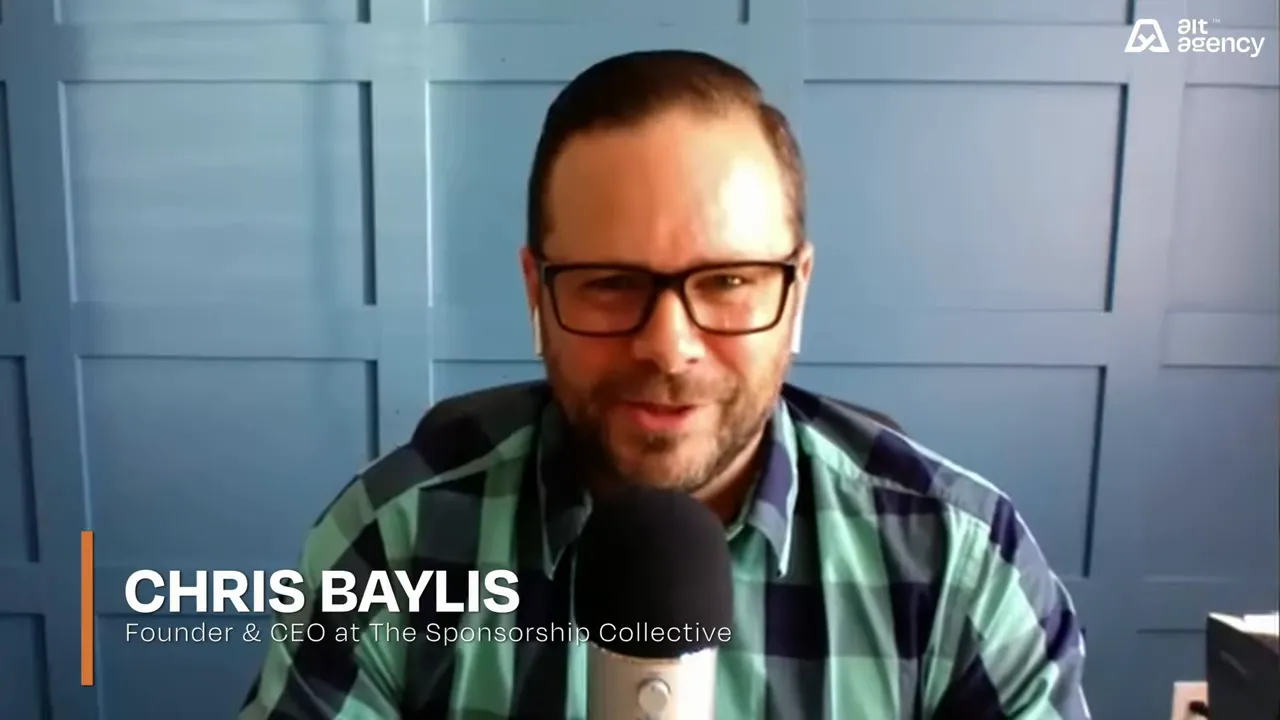
Chris pivoted from done for you projects to selling only his Done With You cohorts. He used pre-selling to validate pricing and deliver live prototypes, which let him scale revenue while reducing the number of draining bespoke clients.
These founders followed the same pattern: tight positioning, a documented process, pre-sold prototypes, a minimum marketing funnel, and a measured sales process. You can replicate each of those moves.
Final notes — the leverage of fewer clients and more profit
Productizing a service is not about doing less work. It is about doing the right work repeatedly so you earn more for your time and create a business that scales predictably. The stages above are designed to reduce chaos and give you a clear playbook for growing to $1M per year without needing an unwieldy team.
Start where you are. Tighten your positioning this week. Map your delivery process by writing down every step. Pick one content channel and commit to it for three months. Pre-sell a minimum viable cohort before you build. Add a 15-minute fit call and start tracking metrics in a single spreadsheet. These incremental steps compound quickly.
Productized services reward clarity and repetition. Build the product, build the funnel, build the sales machine, and the rest becomes execution, not invention.