People love stories. They stop the brain from daydreaming, sync one brain to another, and create a tiny rush of dopamine that makes your message stick. For a small business or nonprofit, that stickiness translates into trust, faster decisions, more referrals, and a culture that remembers why it exists.
This is a practical guide to turning your origin into a short, compelling narrative that positions your organization as the competent guide and the customer or donor as the hero. Read it, copy the templates, and start practicing until your story feels effortless.
Why storytelling matters more than features and benefits
People make decisions with emotion first and logic second. Facts and features can inform, but a story compels. When you tell a story, listeners stop daydreaming and plug into your point of view. Neuroscience calls this neural coupling: when you tell a story well, the same parts of your brain and your listener's brain light up.
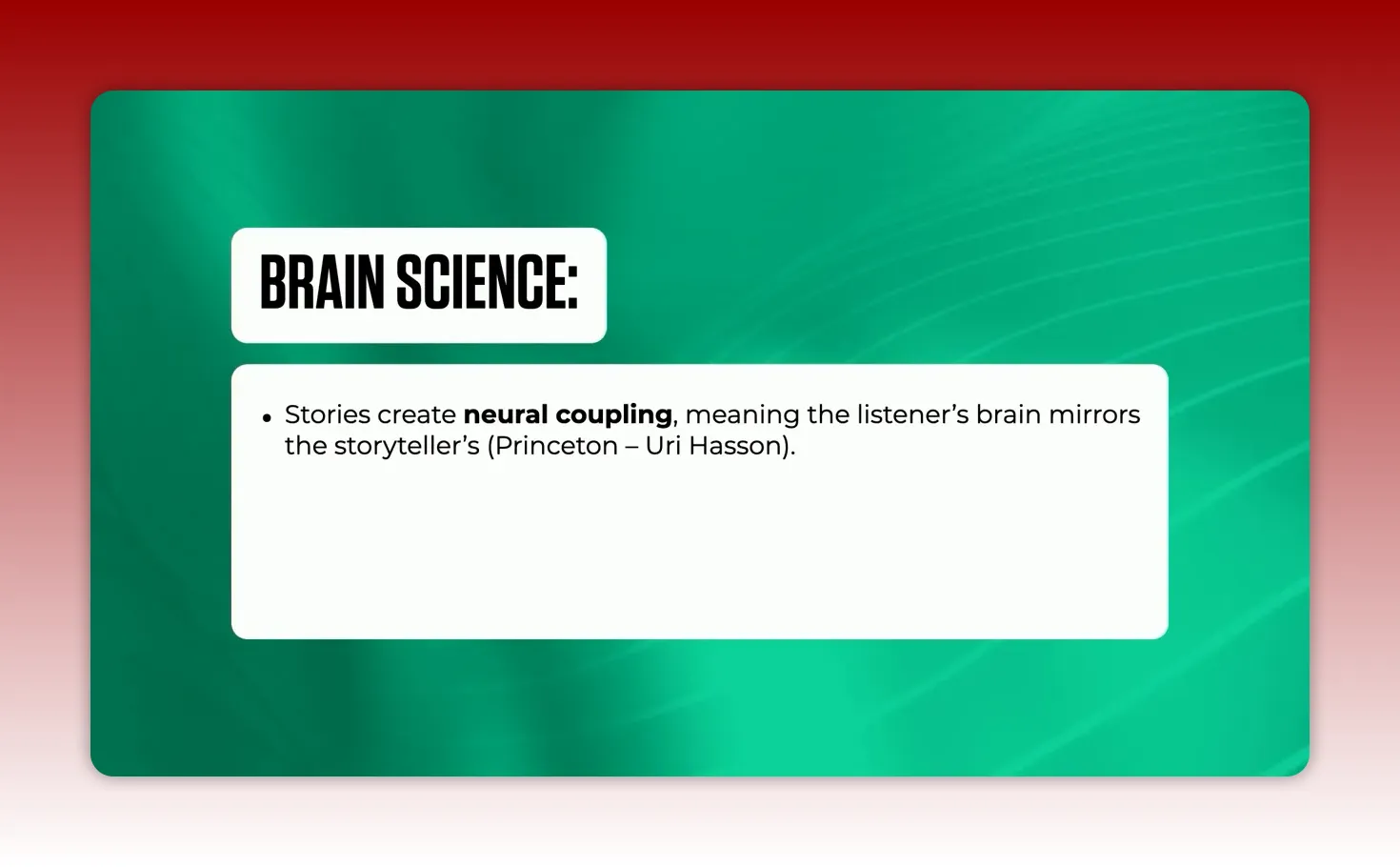
The result is not just attention. Stories increase empathy, trust, attention, and memory retention. They produce a tiny pleasure response—dopamine—that creates a positive association with your brand. That small chemical nudge makes people more likely to remember you, choose you, and tell others about you.
What this means for small organizations
- Shorter sales and fundraising cycles: A well-crafted story helps prospects feel understood faster, so they move from interest to action more quickly.
- Better word-of-mouth: People will tell a story they felt, not a spec sheet they read.
- Clearer internal focus: Repeating a single origin story builds culture and alignment across staff and volunteers.
Four principles every effective business story follows
Not every story is the same, but the best business stories share these traits. Use them as a checklist as you craft or refine your narrative.
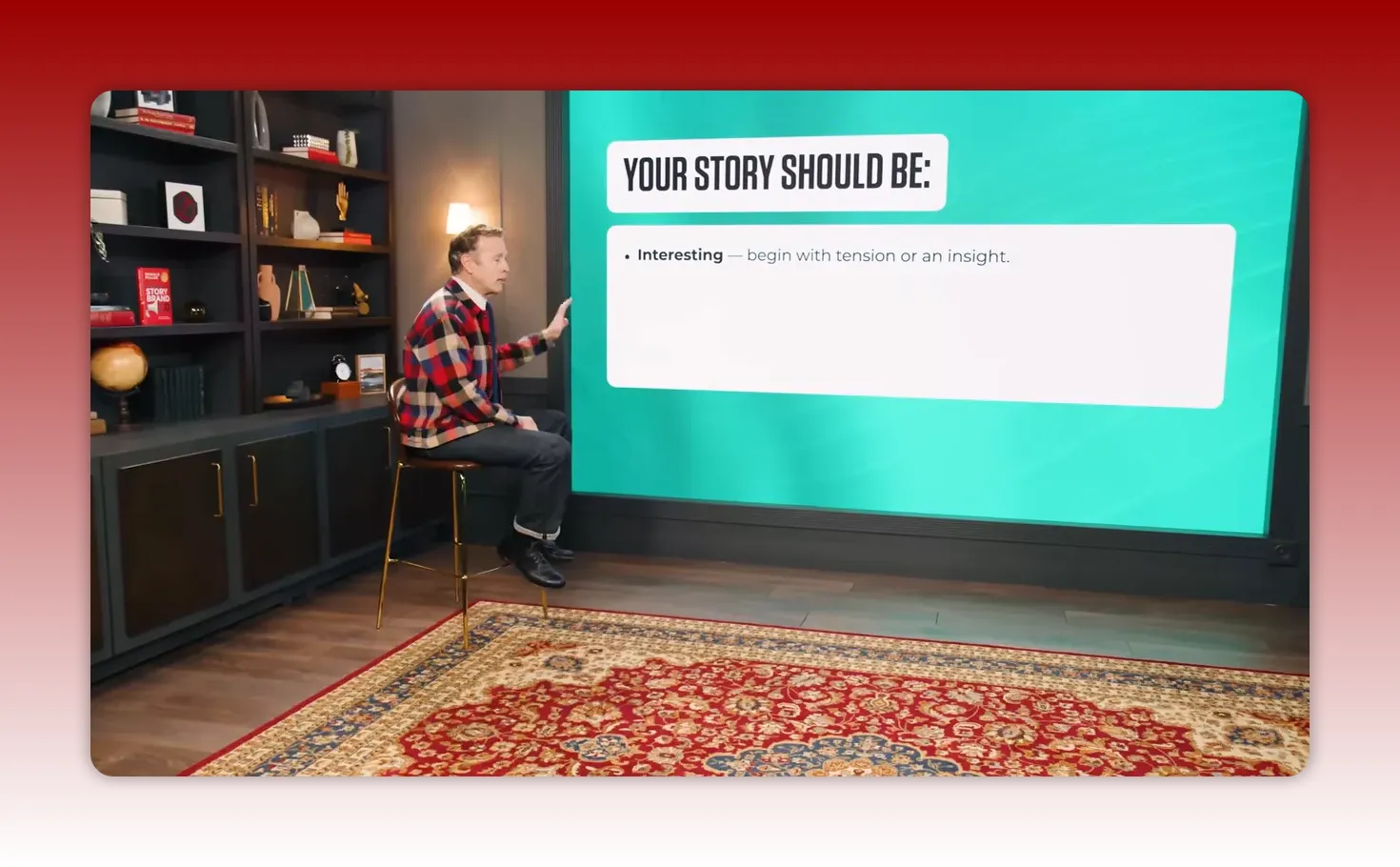
- Be interesting and entertaining: If all else fails, be entertaining. Your audience will be more likely to listen and remember.
- Keep it brief: Remove unnecessary detail. Every sentence is a bowling ball the listener has to carry—don’t overload them.
- Make it emotional: Share what mattered. Facts alone do not create connection.
- Make it about the customer: Your story should explain why you care about the customer's problem and how you help them win.
Don't be the hero—be the guide
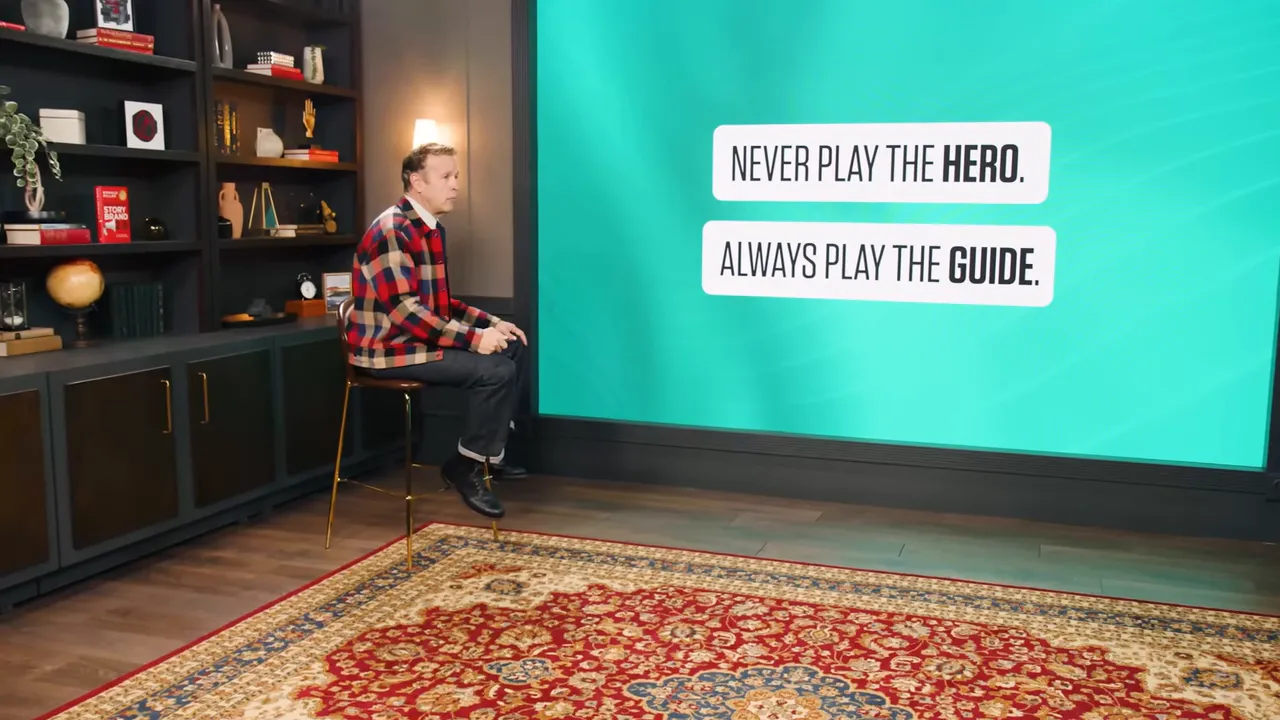
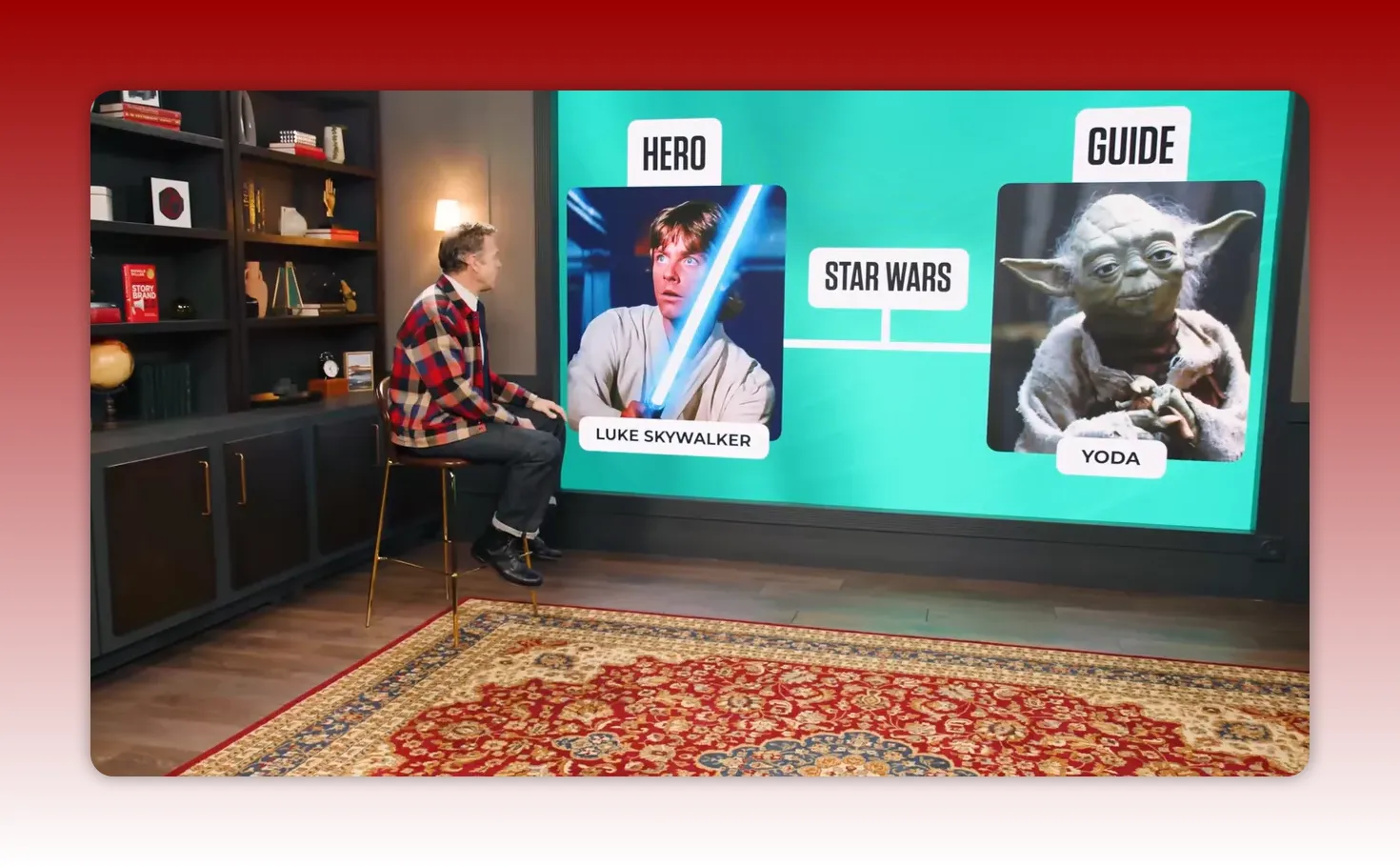
Stories have roles: victim, villain, hero, and guide. The customer is the hero. Your job is to be the guide—wise, competent, empathetic, and equipped with a plan. Saying "we were trying to grow our revenue" makes you the hero with problems. That is counterproductive. Instead, tell the story of how you overcame the same issue and now help others overcome it.
Think Yoda, not Luke. Mary Poppins, not George Banks. The guide has empathy because the guide has been in the hole before and got out. That experience creates authority. Show competence; do not apologize.
Why playing the hero loses
If you center your brand on your own struggle or charisma, you risk two things: you remove yourself from the customer's story, and you invite doubt. A hero brand asks customers to root for your journey. A guide brand invites customers into their own victory. Two separate stories do not resonate together.
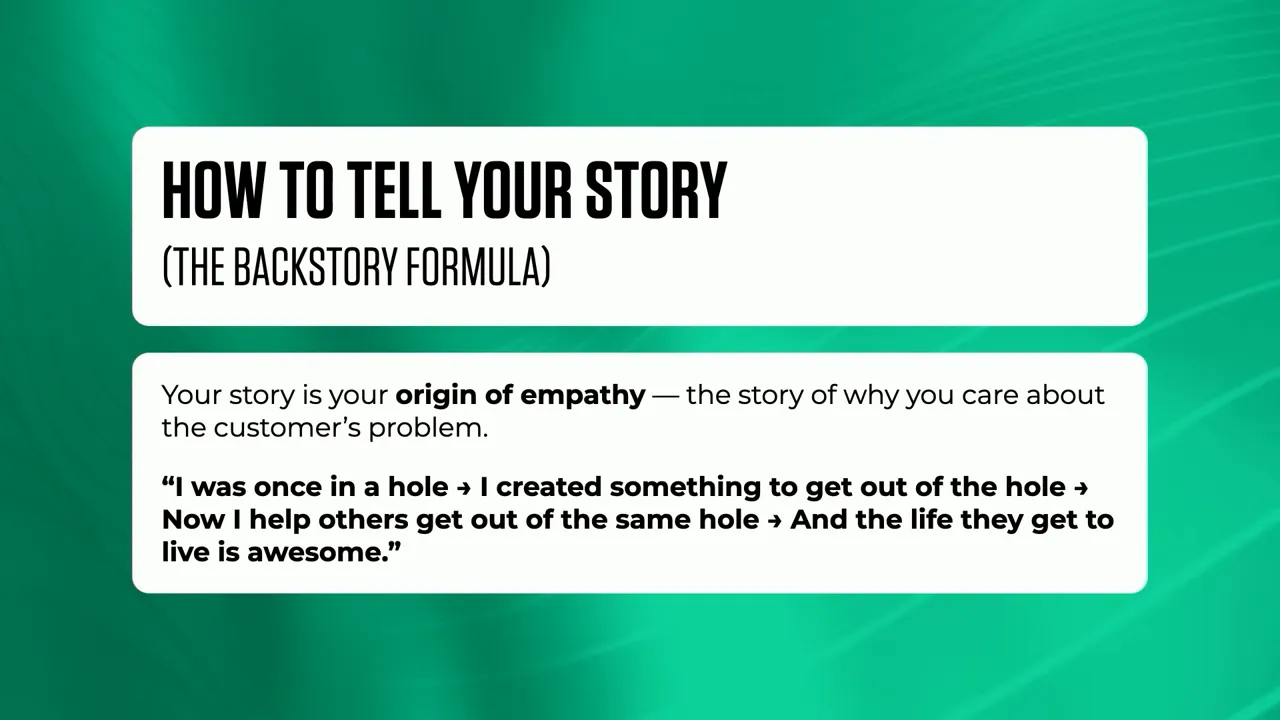
The four-part story formula (the origin of empathy)
Here is a short, repeatable structure you can use in speeches, on your About page, in grant proposals, or on fundraising letters.
Start in a hole. Describe the struggle you or a customer faced. Name the person if you can. Be specific about the pain.
Introduce the tool. What did you create or discover that got someone out of the hole? This is your product, program, or service—explained clearly and simply.
Explain the mission. Why did fixing this problem become your purpose? How did one solution become a calling to help others?
Show the transformation. What life do people get to live because they no longer live in that hole? Paint the outcome.
Example: A small nonprofit food pantry
Start in a hole: "Families in our neighborhood were skipping meals. I met Maria, a single mother, whose children went to bed hungry three nights a week."
Tool: "We built a weekly community pantry that sources fresh produce from local farmers and provides meal kits."
Mission: "After seeing families struggle, we committed to ensuring no child in our neighborhood goes to bed hungry."
Transformation: "Now, kids have the nutrition they need to focus in school, parents regain dignity, and neighbors volunteer at a space that restores community."
How to craft your story—step by step
Below are practical prompts to fill in the four-part formula. Use them to draft a 60–90 second story and a longer About Us paragraph.
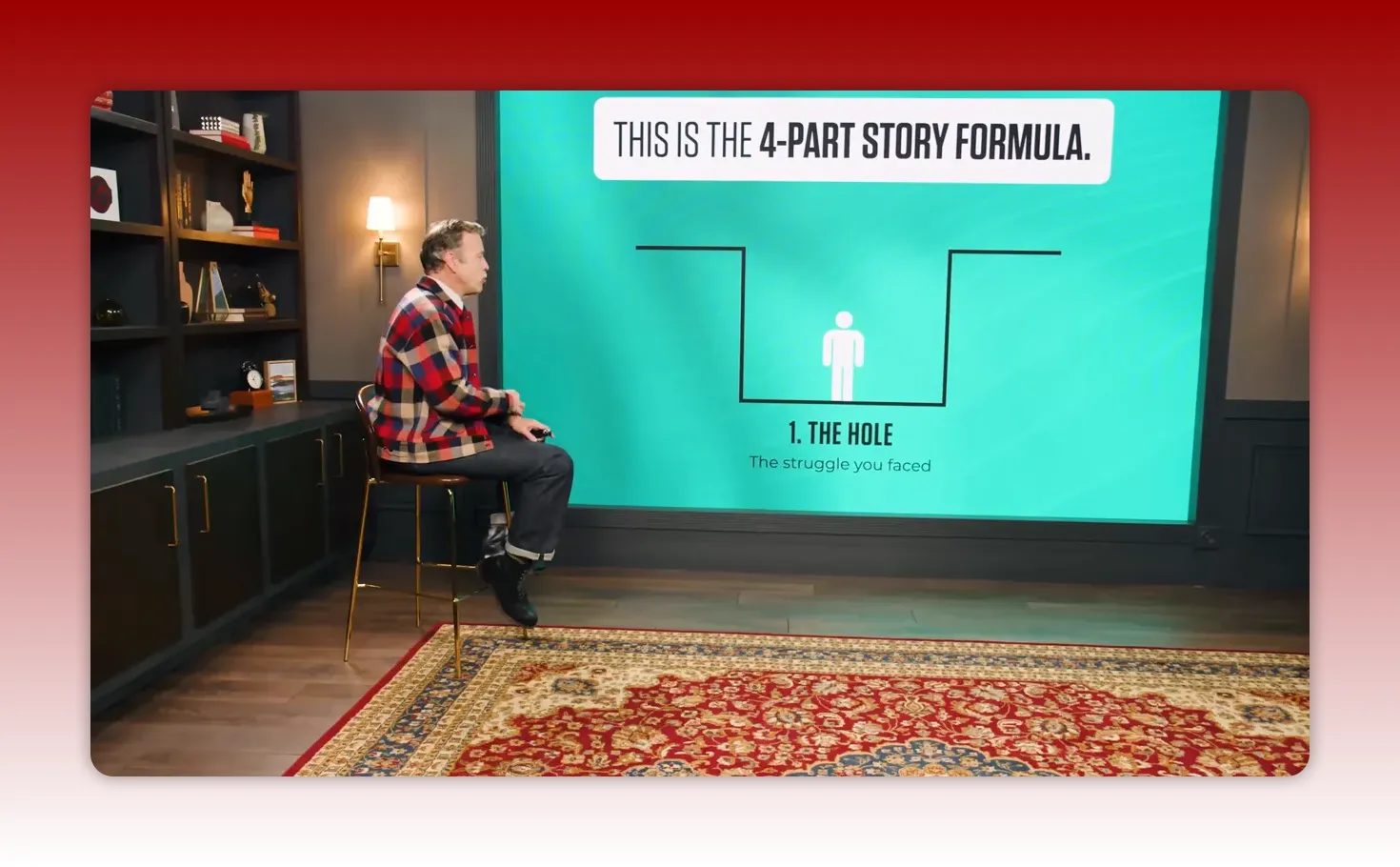
Step 1: Start in a hole
- Who experienced the problem? Give them a relatable name.
- What was happening in their life because of this problem? Use sensory detail when possible.
- How did this pain make you feel?
Prompt: "I met [name], who was [situation]. Because of this, they felt [emotion]."
Step 2: The tool
- What simple thing did you build or change?
- How does this solution remove the pain?
- Explain it in one clear sentence—no jargon.
Prompt: "We created [solution], which [how it removes the problem]."
Step 3: The mission
- Why did solving this problem become your cause?
- What made you commit to doing it for others?
Prompt: "Because [reason], we made it our mission to [what you now do for others]."
Step 4: Transformation
- What does life look like after the change?
- How is your customer or beneficiary different?
Prompt: "Now [who] can [benefit], and life looks like [positive outcome]."
Short templates you can copy and paste
Use these to create a 30–90 second spoken version and a 150–350 word About Us paragraph.
30–90 second spoken template
"I met [name], who was [describe struggle]. It bothered me because [why you felt it]. We created [product or service], which [how it solves the problem]. Now, people like [who] can [what they can do now]. That's why we exist: to [mission]."
About Us paragraph template (longer)
"[Organization name] started when [founder name] met [name] and discovered [pain]. After seeing [specific consequence], [founder name] created [solution], a [short description]. That solution worked because [why it worked]. Today we exist to [mission], and because of our work [describe transformation]."
Where to use your story
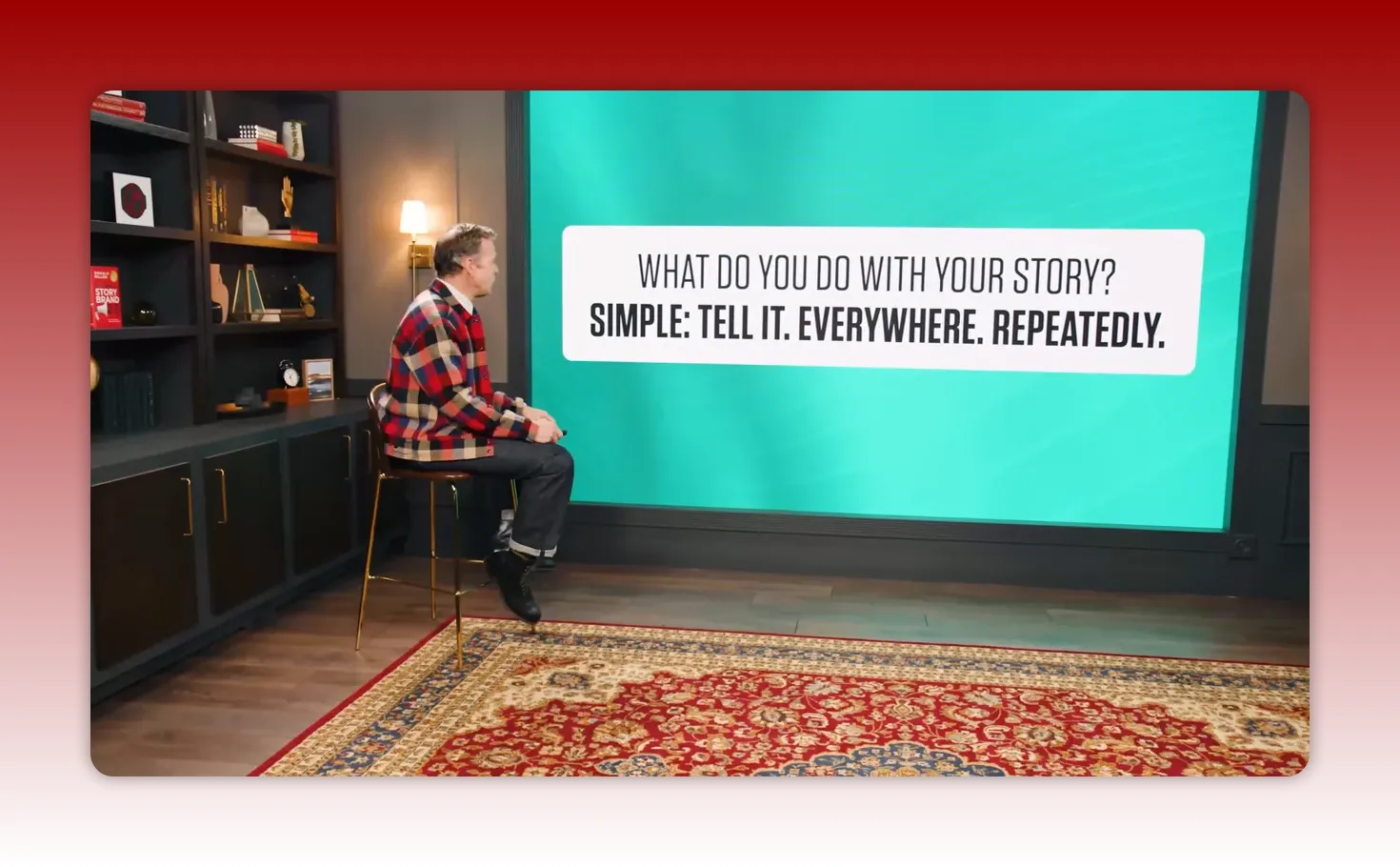
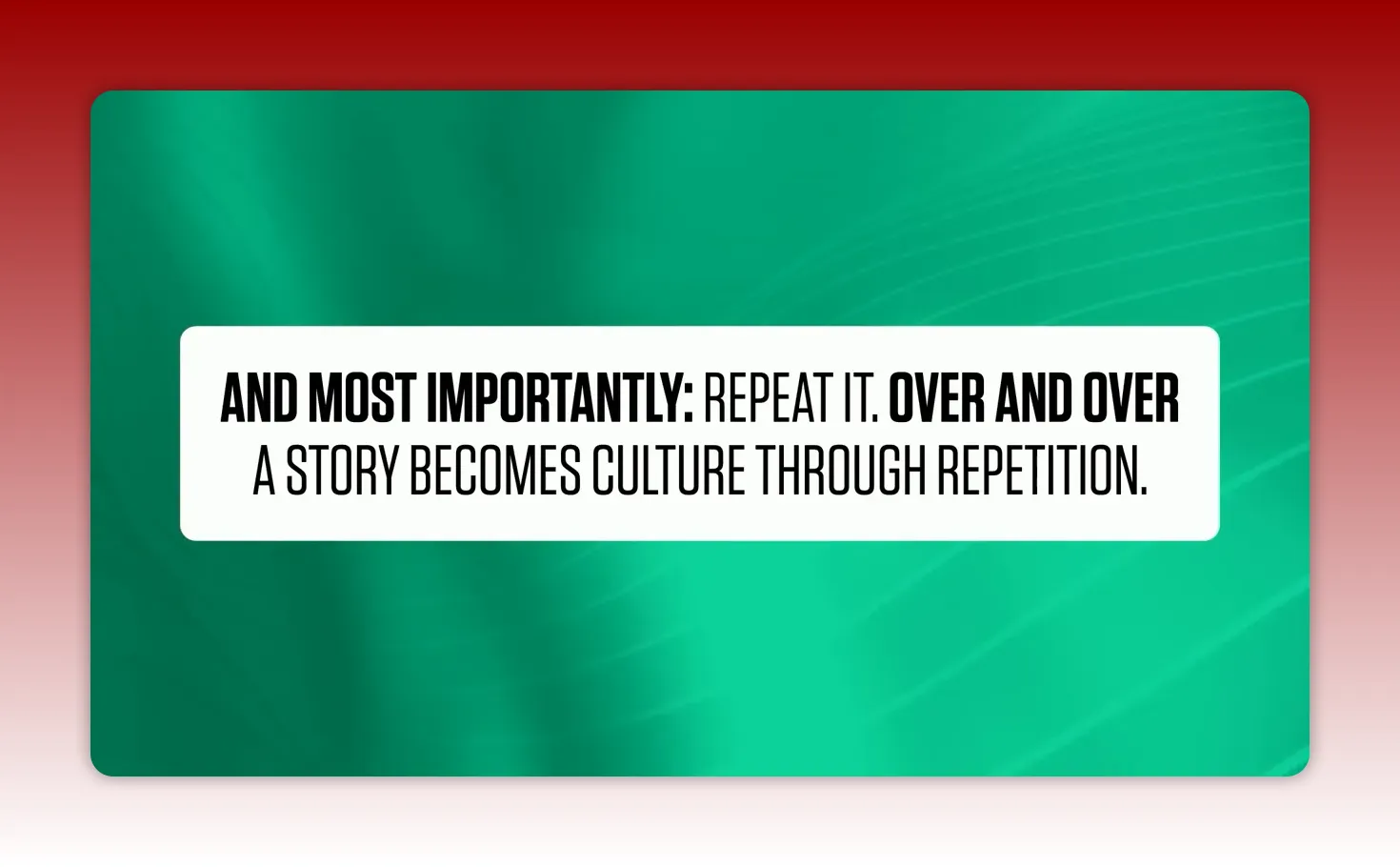
Repeat your story everywhere—on your About page, in fundraising letters, on the homepage voiceover, in pitches to partners, in volunteer orientations, and in casual conversations. Repetition turns a story into culture.
- Website About page: A slightly longer version with the origin of empathy and the mission.
- Homepage (30 seconds): A voiceover with B-roll showing your work and the transformation.
- Email and fundraising asks: Open with the story's hole and transformation to motivate support.
- Podcasts and presentations: Lead with the story to create immediate connection.
- Grant proposals: Use the formula to show why your program is necessary and effective.
Rehearse until it feels effortless
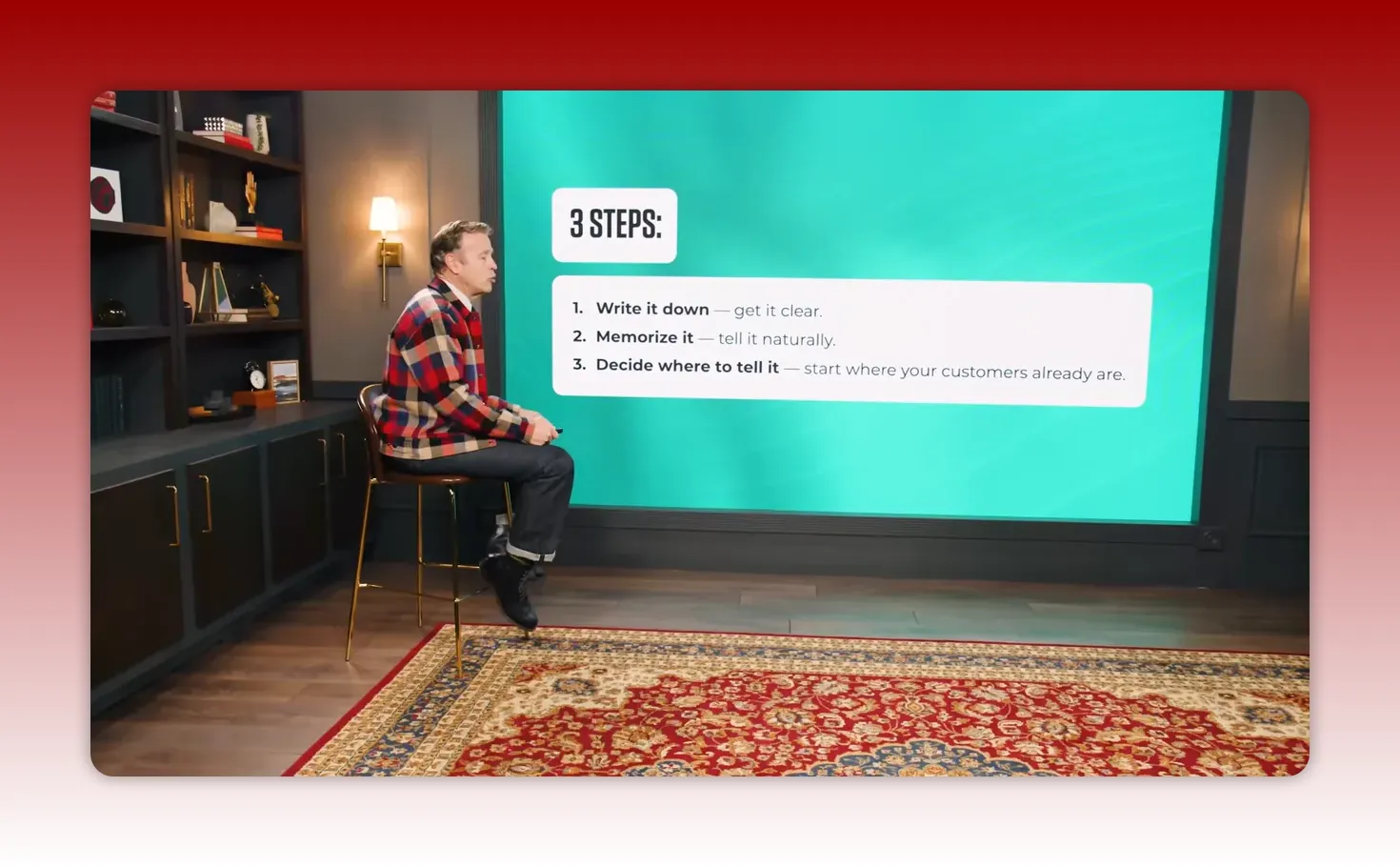
Tell your story so often that you can say it naturally. Great storytellers rehearse. Practice it in the parking lot, at staff meetings, and in elevator conversations. Record yourself. Edit the parts that wander. Simplify until your 30-second version feels like a conversation rather than a speech.
Common pitfalls and how to fix them
Pitfall: Your story reads like a resume
Fix it: Remove the timeline of achievements. Focus on the moment that sparked empathy and led to the mission.
Pitfall: You are the hero
Fix it: Reframe. Make the customer the hero. Tell how you help them win. Show your authority by describing how you overcame the same problem or how you repeatedly helped others overcome it.
Pitfall: Overloaded with details and jargon
Fix it: Ask a non-expert to read the story. If they ask, "What do you even do?" rewrite until the answer is clear in the first sentence.
Pitfall: No transformation
Fix it: End with the tangible change. What is different in the hero's life because of your help?
Examples reimagined for small businesses
Here are quick, realistic examples you can adapt for common small-business types.
Local coffee shop
Start in a hole: "I used to work at a job where every morning felt rushed and anonymous."
Tool: "We built a small coffee shop where folks can slow down, meet a neighbor, and leave with a smile."
Mission: "Now we show up every morning to give our community a place to connect."
Transformation: "Customers rediscover what it feels like to start a day with human connection, not just caffeine."
Landscape business
Start in a hole: "Homeowners were embarrassed to invite people over because their yards felt neglected."
Tool: "We created a seasonal maintenance plan that transforms yards into spaces people love."
Mission: "We help neighbors reclaim outdoor spaces so they can host, relax, and play."
Transformation: "Backyards once ignored become places for family time and weekend memories."
Small nonprofit arts group
Start in a hole: "Local artists had no venue and no steady audience."
Tool: "We opened a micro-theater that pairs emerging artists with paying audiences on a regular schedule."
Mission: "We exist to give creative people a stage and our community a chance to champion the arts."
Transformation: "Artists build careers, and the community regains vibrant local culture."
Using AI to draft and refine your story
AI is a great first draft tool. Put your raw answers from the prompts above into an AI prompt and ask it to write a short story following the four-part formula. Then edit with these rules:
- Keep the customer's pain vivid and specific.
- Make the solution one clear sentence.
- Avoid jargon and inflated claims.
- Ensure the final line paints the transformation plainly.
After AI drafts your story, memorize it, practice it, and test it on real people. If they nod and say, "I get it," you are close. If they ask clarifying questions, keep simplifying.
Checklist: A quick story audit
- Is the customer the hero?
- Do you state the hole clearly?
- Is the tool explained in one simple sentence?
- Does the story reveal why you care?
- Is the transformation vivid and relatable?
- Is the whole story under 90 seconds when spoken?
- Have you practiced it until it feels natural?
How repetition turns story into culture
Stories shape decisions. Repeat your origin of empathy at staff meetings, onboarding, and in volunteer training. Make it the lens through which people make decisions: will this choice help our hero get out of the hole faster or slower?
When your team knows the story, fundraising becomes easier because donors can quickly see the problem and the positive change their support makes. Volunteers stay longer because they can connect emotionally to the outcome. Customers spread the word because they are telling the story you taught them to tell.
Two short scripts you can use right now
60-second pitch for donors
"I met [name], a [short descriptor], who was [short struggle]. That inspired us to build [solution], which [how it works]. Today, families in our neighborhood can [outcome]. With a monthly gift of [amount], we can [specific next step]."
30-second elevator pitch for a networking event
"We help [who] who are [pain] get to [end state] by [what you do]. We started after [brief origin], and now [short result]."

Common questions small leaders ask
How long should my story be?
Have a 30-second version, a 60–90 second spoken version, and a 150–350 word About Us version. Use the 30-second to open conversations and the longer version to explain your mission on your website.
Can I tell my full biography on the About page?
Only tell the parts of your biography that explain why you care about the customer's problem and how you became competent to solve it. Save unrelated career details and accolades for separate sections.
What if I never personally experienced the hole?
Tell the story of a specific customer you met. Describe their pain, what you built to help them, and why it became your mission. The origin of empathy can come from seeing someone else's struggle, not only your own.
How do I avoid sounding fake or overly polished?
Be specific and truthful. Include a small detail that only someone who lived the story would know. Avoid hyperbole and sweeping promises. Authenticity comes from truthful detail and a focus on the hero's outcome.
Final checklist before you publish or present your story
- Did you name the person in the hole or give a clear, typical example?
- Can someone repeat your 30-second version back to you accurately?
- Is the solution described in plain language anyone can understand?
- Does the story end with a tangible transformation?
- Do staff and volunteers know the story and can they tell it naturally?
Your story is not a biography. It is an empathy origin story that explains why you care, how you are competent, and how your customers or beneficiaries get to live better lives because of your work. Be the wise, competent guide. Invite your people to be the hero. Repeat this story until it becomes the lens through which everyone on your team makes decisions.
Start now: write your four-sentence origin, memorize it, and tell it to someone this week. The more you tell it, the more people will listen, remember, and act.
This article was created based on the video How to Tell the Story of Your Business.


